
10
Is it religious trauma if you loved church? With Cheyenne Garstad, LCSW
Therapist Cheyenne Garstad, LCSW, on why religious trauma is rarely the reason people start therapy, how good memories hide it, and rebuilding community.
Episode 8 · 53:35
Where Did Your Mind Just Go?
Psychologist Christopher Schadt, PsyD, on making mental health content, what the algorithm rewards, parasocial trust, and the harm in five easy steps.
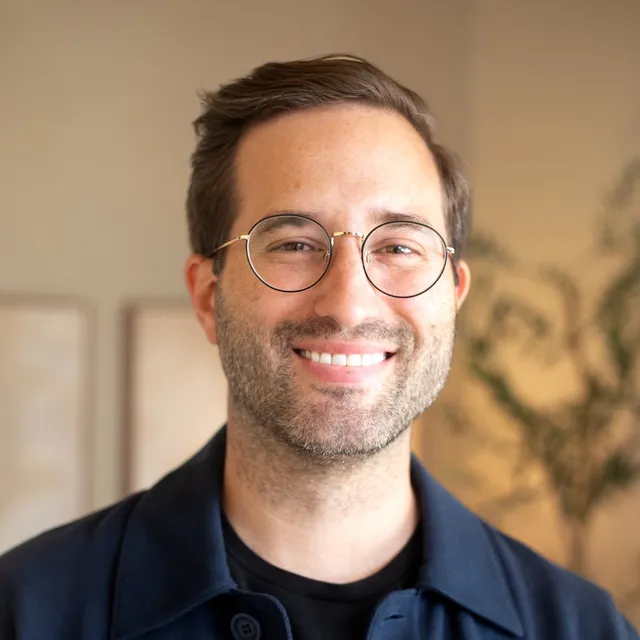
Somewhere on your feed right now, a licensed therapist is telling you the five things that will fix your relationship. Chris Schadt has a question about that post: what happens to the person who tries all five and is still stuck?
In this episode, Dr. Gabriel Lowe sits down with Christopher Schadt, PsyD, a clinical psychologist in private practice in the Silver Lake neighborhood of Los Angeles, where he specializes in men’s issues, interpersonal trauma, and attachment trauma. He trained at Rosemead School of Psychology, where he and Gabe took classes together, and completed pre- and postdoctoral training at the New York Harbor VA. He is also, like Gabe, a mental health content creator — or was, until he quietly stopped posting. Part of what makes this conversation good is that he’s still working out why.
Chris started posting for the usual reason: it was the advice. Build recognition, meet other professionals, generate referrals. But he wanted the content to feel true to the field as he understands it — one that wrestles with big questions and complex human realities. The algorithm wants the opposite. It rewards the post that names a really big problem and then hands you five things to fix it.
Then there was the part he didn’t expect. He told himself he’d post and detach from the response, and instead found himself checking constantly — likes, saves, shares, whether it was “working.” And what worked was rarely the carefully explained concept. It was the succinct thing, boom boom boom, something a viewer could grab and run with.
The heart of Chris’s hesitation is a kind of harm he calls insidious. Someone in real pain — stuck in a torturous relationship dynamic, suffering real nervous-system dysregulation — sees a licensed psychologist promise a handful of tips that will fix it. The post gives them genuine hope. Then the tips don’t work, because the struggle was never that simple. And where does that leave them?
Well, I tried these tips from a licensed psychologist and they didn’t work. Maybe I’m hopeless.
That’s the after-image the confident post can leave: not just disappointment, but shame — the sense that the evidence-based thing failed because of you.
Gabe’s mind goes to people arriving at therapy with a diagnosis already in hand — their own, or their partner’s. Chris sees the second kind constantly in his work with men: my partner thinks I have narcissistic personality disorder. They hold both sides of it. Sometimes a label is the first handle someone has ever had on a painful pattern; sometimes it’s what helps a person finally recognize a dangerous situation and leave it. And sometimes the label gets weaponized — “you’re just a narcissist” replacing collaboration with finger-pointing.
Chris draws one line he keeps coming back to: there’s a difference between a physician summarizing new research — general information, offered to everyone — and a therapist telling an unknown viewer that if they do X, Y, and Z, they might be a narcissist. The second is a claim about a person the poster has never met.
Neither of them can dismiss the access question, though. The gold standard is personalized care from someone who knows you — and plenty of people can’t afford it, can’t schedule it, or can’t find a therapist within fifty miles. Is a free sixty-second snippet better than nothing at all? They genuinely don’t know, and they say so.
Here’s the framing that reorganizes the whole conversation: directiveness needs relationship. Chris will tell a client “I really think you should do X” in session thirty in a way he never would in session one — by then he knows the person, and he’s earned the right. Confident social media advice is session-thirty directiveness delivered to strangers on session zero.
And the strangers don’t always experience themselves as strangers. Gabe names the parasocial slide — scrolling to relax, disarmed, telling ourselves it’s entertainment while taking in something closer to instruction. Chris wonders out loud about attachment: the familiar child psychologist who happens to post about your exact struggle on the exact evening you’re most discouraged, and the strange, real comfort of feeling spoken to.
The content they both feel cleanest about mostly isn’t made by professionals. It’s the layperson posting a day in the life with ADHD, or what early sobriety actually looks like. Gabe, who specializes in adult ADHD, says lived-experience content has given him more feel for his clients’ inner worlds than the very large DSM on his shelf ever has. A person sharing their own life is making no claim about yours — they’re the expert in their own experience, and that turns out to be a safer kind of authority.
So do you abandon a flawed system, or work inside it and try to make it better? Gabe’s private reassurance, now public: there are bad actors making bad content, and you can’t scrub the internet of it — you can only put good content next to it. Chris’s version, if he goes back, might be one-take reels — unproduced, a thought on the walk to his car — after early days of twenty-five takes per post. Less polished, more sustainable, more like an actual person.
Neither pretends the vulnerability is small. Chris tells a story about using the word “zen” casually in a comment about parenting and being called out by strangers who knew a great deal more about Zen Buddhism than he did. He apologized; one of them forgave him; an actual rupture got actually repaired, on the internet of all places. But the lesson stuck.
You’re posting something, and anybody could see it. So you don’t know how you’re gonna impact somebody.
True to the show’s former name — Hard Questions, No Answers — they never do settle it. “I definitely don’t feel like we answered the questions about social media,” Gabe says at the end, “so I think we’re good.”
If this conversation leaves you wanting the session-thirty kind of help rather than the sound-bite kind, that’s the work our doctoral-level clinicians do every day — individual therapy, including therapy with a male therapist and adult ADHD therapy, in Carlsbad, Encinitas, and Vista, and online across California. A free consultation is a low-stakes place to start. And there are more conversations like this one across Where Did Your Mind Just Go?
Listen to the full episode Spotify Apple Podcasts YouTube
Where Did Your Mind Just Go? is a production of Coastal Therapy Group. This episode was edited by Serena Rio.

The host
Dr. Gabe Lowe is a psychologist and the creative mind behind Where Did Your Mind Just Go? — a passion project born from a belief that the world needs more spaces where curiosity and uncertainty are embraced, not solved away. Each episode, he brings his gift for deep listening and unhurried conversation to topics that matter, sitting across from bright, thoughtful minds and following the dialogue wherever it wants to go.
Where Did Your Mind Just Go?
10
Therapist Cheyenne Garstad, LCSW, on why religious trauma is rarely the reason people start therapy, how good memories hide it, and rebuilding community.
09

Psychologist Anjali Ferguson, PhD, on why kids notice race by six months, why the adults are the ones who aren't ready, and raising proud, safe kids in a hard year.
07

Psychologist Kerry Horrell, PhD, on therapist anxiety, holding the wish to live alongside the wish to die, and asking for time instead of a promise.
Follow the show
New episodes drop the first and third Wednesday of the month. Follow the show on your platform of choice, or get an email when one lands.
Or follow on Apple Podcasts Spotify
If the episode left you with better questions about your own life, we can sit with those too. Book a free consultation, or call or text (760) 334-6262.