
10
Is it religious trauma if you loved church? With Cheyenne Garstad, LCSW
Therapist Cheyenne Garstad, LCSW, on why religious trauma is rarely the reason people start therapy, how good memories hide it, and rebuilding community.
Episode 9 · 56:00
Where Did Your Mind Just Go?
Psychologist Anjali Ferguson, PhD, on why kids notice race by six months, why the adults are the ones who aren't ready, and raising proud, safe kids in a hard year.
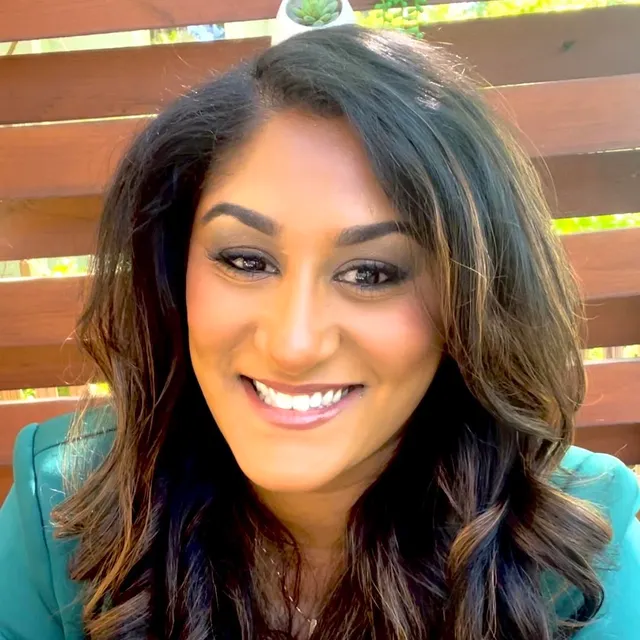
Anjali Ferguson’s two-and-a-half-year-old learned that her middle name is an Indian name while getting her hair done one morning. Is she Black or Indian? “I’m both,” she said, and then everybody went on with their day. That, more or less, is the whole philosophy of this episode.
In this episode, Dr. Gabriel Lowe sits down with Anjali Ferguson, PhD, a culturally responsive clinical psychologist in Virginia who has spent most of her career on the conversations families avoid. She is the founder of Parenting Culture, a psychologist-led nonprofit that builds resources for raising kids in a multicultural world, and the executive director of the Virginia Association for Infant Mental Health. With her husband Justin she wrote the picture book An Ordinary Day, and her TEDxYouthRVA talk makes the case that adults, not children, are the ones who struggle to talk about race.
She grew up in Northern Virginia, in a South Asian household, with part of her childhood spent in India. Her husband is a Black man born and raised in America, and she is candid about the crash course that gave her in her own biases and blind spots. Their two children are growing up Black and Indian at once, and a lot of what follows comes straight from their kitchen.
Gabe names the thing most parents quietly know: the discomfort is ours. Anjali agrees completely. Kids, she says, will keep it real with you. It is the adults who project their own anxieties, and sometimes their own traumas, onto a conversation that doesn’t need them. When we go quiet, or steer around it, what a child learns is that race is something you get uncomfortable and silent about.
And silence has a cost, because kids fill in the blanks themselves. They are noticing anyway. Research puts the age at which babies register race-based differences at four to six months. We give them words for the blue sky and the green grass; we can give them words for why Mommy’s skin is darker than Daddy’s.
Anjali offers a couple of reassurances for the parent who is bracing. You are allowed to fumble. When her son asks something she isn’t ready for, she says so and comes back to it at bedtime, which buys her time to collect her thoughts. And the conversation is almost never as big as you fear it will be.
Part of the trap we get into as adults is we think we need to solve racism in every conversation that we’re having with our kids.
Her example is a three-year-old reading about the Children’s March in Birmingham, working out that under those rules he wouldn’t have been allowed on the same playground as his friends, declaring it unfair, being visibly upset about it, and then, within five seconds, asking if they could go play excavators. He led the conversation to exactly the depth he could hold, and then he was done. That is normal. It is a lifelong series of conversations, and the length and intensity will change as he does.
Gabe’s daughter is a year and a half, and he asks the question a lot of parents are asking this year: how do you tell a small child what is happening in the country without terrifying her? Anjali’s answer is developmental appropriateness. A five-year-old does not need the details of immigration raids. A five-year-old can understand that some people are being treated unfairly because of where they come from, what their skin looks like, or what language they speak, and that there are things a family does together to stay safe.
She has had that conversation herself, with her kindergartner, including whether to keep a copy of his birth certificate in his backpack. Kids at that age are rooted in fairness, and the move she recommends is to lean into it rather than argue with it: you are right, this is not fair, and here is what we are going to do. That takes the pressure off a child who would otherwise be trying to work it out alone.
For families who are directly at risk, Parenting Culture published a trauma-informed guide for supporting children through family separation. Its core advice is to keep it factual, keep your own emotion out of the explanation, and keep reminding children that they are held by community. Community, Anjali says, is most of how anyone copes with a cultural trauma.
Anjali came to racial trauma through her own training. She was an intern, deep in trauma work, when Michael Brown was killed, and she was struck by how differently her Black family members responded from how she did, and by how little the field had to say about it. Nobody was assessing for it. Nobody was treating it well. There was very little research.
Her working definition is straightforward: trauma symptoms, or symptoms of toxic stress, that follow an incident of racism or discrimination. It can be one incident or a slow accumulation, and the incidents do not have to be large. Microaggressions can be every bit as traumatic, and the name is a misnomer for the people on the receiving end. Newer literature suggests Black youth experience five or more of them a day. Over time that shows up as behavior, mood, anxiety, sleep and appetite problems, and eventually the same physical health risks the ACEs research mapped for other kinds of repeated trauma.
Then she widens the lens. Collective traumas like enslavement do not stay in the past; they show up centuries later in who is overrepresented in child welfare statistics, in access to housing and food and income, in coping and mental health outcomes across whole communities. You cannot treat race-based trauma one person at a time and call it done.
Gabe notices that hearing “five a day” makes the privilege of having zero suddenly visible, and asks how privilege comes up in her house. Anjali’s view is that every one of us has some, and the useful work is finding out which kind. Hers includes being able-bodied, which she only saw clearly after working alongside disabled colleagues. The word gets people defensive because they hear it as a claim that they never struggled, and that is not what it means. It is a social advantage you get for belonging to a group, whether or not you ever asked for it.
Her teaching example is religious privilege. She grew up Hindu, and Diwali and Holi meant her parents taking unpaid time off, because the school calendar was built around Easter and Christmas. Most people who celebrate those holidays have never once had to think about it. That, she says, is what a blind spot feels like from the inside: nothing. The point of noticing it is not guilt. It is that once you know what you have, you can use it in rooms where other people aren’t.
Gabe floats the idea that every marriage is a multicultural marriage. Anjali goes further: every person you meet is a cultural experience, including someone who shares your identity on paper, and the more you assume you already understand them, the less of them you get to know.
In her own partnership the differences were forced into the open early. Sleepovers, holidays, whether anyone should convert. They chose neither conversion nor compromise but something new: her husband does puja with the family and can explain Ganesh and Lakshmi, and her kids recently had their first Sunday in a Black church and loved it. The agreement underneath is that neither of them was raised wrong, and that what they are building will look like neither of their childhoods.
When Gabe asks what she is anticipating as her kids grow, the first word out of her mouth is safety, and how little control she will have over it. That is why the public-versus-private school question, which well-meaning friends keep raising, lands so differently for her family. She and her husband have chosen public school for the diversity and community, and when the enrichment isn’t there and people suggest they could just go private, the answer is always: at what cost? What they are thinking about is a situation like the death of Nolan Wells, the Black teenager found dead after a July 4 boat trip with friends in Mississippi. When your child is the only one, the risk is not only social and emotional.
And then her husband pointed out the other side of it: a group of Black teenagers messing around on a street corner would be at risk for a different reason. The world adultifies Black and brown children early, and innocence is not always read as innocence. “Check back in with me in ten years,” she says.
Her other worry is AI, which most teenagers are now using in place of an adult conversation or a therapist, in a space that is barely regulated and has already been linked to real harm. Parenting Culture has since published a parent guide to raising kids in the age of AI.
So where does hope live? Partly in accepting that some of this is inevitable, processing it together as it happens, and holding one mantra.
We can’t control what’s outside of this house, but we can control what’s inside of this house, and we want the inside of these walls to always be a soft place for our kids to land.
Rules and boundaries included. The home is deliberately curated for joy, humor, and the full range of feelings, and she says raising small children right now has been protective for her, because they are a reason to disconnect from the noise and be present.
The children’s book came out of that same instinct. In 2020, stuck inside and reading to their son every night, Anjali and Justin realized there was nothing on the shelf about race and microaggressions for very young kids, and started trading what-ifs until one of them said: let’s actually write it.
An Ordinary Day follows two boys, Logan and Malik, through the same first day of kindergarten, side by side. Both run into school excited; only one teacher says “whoa.” Both are determined on the soccer field; one is called a great player and the other is told to share the ball. Both boys have a good day, on purpose, because the authors did not want a trauma story. The book ends with questions for families, starting with the simplest: whose day did you like more, and why? Two-year-olds can answer it. The science is baked in along the way, from the word gap between families with time to read at night and families without it, to a glossary at the back for explaining bias, privilege, and microaggressions to a child.
Gabe admits he hasn’t read it yet and suspects the real lesson would be spending a day inside Malik’s experience. A picture book, he says, turns out to be a powerful way to hand someone a life they have no other access to. Anjali has also signed with a major publisher to write the parent companion, due out in fall 2027, covering everything in this conversation and then some, including how to raise an ally.
Anjali still loves clinical work. She runs a grant-funded rapid diagnostic clinic so that Black and brown children on the East Coast aren’t stuck on waitlists, and she is trying to keep it free. But after becoming a parent she noticed she was coming home from a day of play therapy with nothing left for her own son, and the advocacy work was picking up at the same time. Through the Virginia Association for Infant Mental Health she helped write the first infant and early childhood mental health bill introduced in the Virginia House, proposing universal developmental screening and mental health consultation statewide. It went to committee, landed with people who had no clinical background, and came out, in her words, no longer psychologically sound. She is going back this summer with new recommendations.
None of it is what psychologists are trained for. Nobody teaches you to write a bill or give expert testimony. Her plug for anyone listening who is curious: nonprofits doing this work would value your expertise, and the commitment can be as small as a written comment on a bill. Build the relationship and they will call you.
On the joy side, Parenting Culture just ran its first fatherhood event, Braids & Bordeaux, where girl dads got a short talk on fathers’ mental health, a blind wine tasting from Justin, and two or three new hairstyles to practice on mannequins and take home. It sold out, and they are doing it again.
If this conversation lands close to home, our doctoral-level clinicians work with families in exactly this spirit: child therapy and teen therapy in Carlsbad, Encinitas, and Vista and online across California, a Connected Parenting Group for parents who want company in the questions, and culturally responsive care for families holding more than one identity at once. A free consultation is an easy first step. And there are more conversations like this one across Where Did Your Mind Just Go?
Listen to the full episode YouTube
Where Did Your Mind Just Go? is a production of Coastal Therapy Group. This episode was edited by Serena Rio.
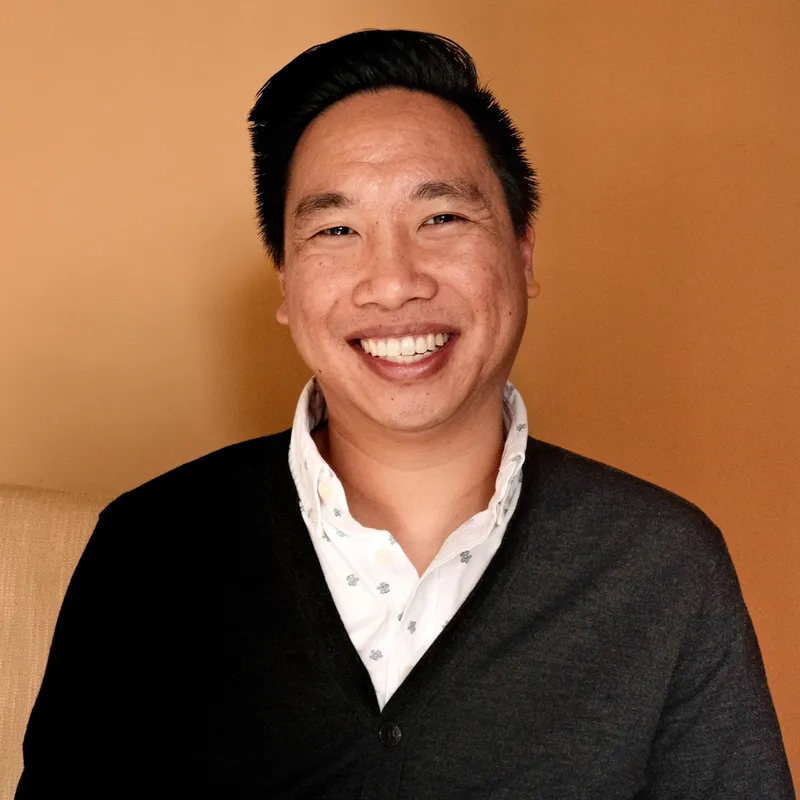
The host
Dr. Gabe Lowe is a psychologist and the creative mind behind Where Did Your Mind Just Go? — a passion project born from a belief that the world needs more spaces where curiosity and uncertainty are embraced, not solved away. Each episode, he brings his gift for deep listening and unhurried conversation to topics that matter, sitting across from bright, thoughtful minds and following the dialogue wherever it wants to go.
Where Did Your Mind Just Go?
10
Therapist Cheyenne Garstad, LCSW, on why religious trauma is rarely the reason people start therapy, how good memories hide it, and rebuilding community.
08
Psychologist Christopher Schadt, PsyD, on making mental health content, what the algorithm rewards, parasocial trust, and the harm in five easy steps.
07
Psychologist Kerry Horrell, PhD, on therapist anxiety, holding the wish to live alongside the wish to die, and asking for time instead of a promise.
Follow the show
New episodes drop the first and third Wednesday of the month. Follow the show on your platform of choice, or get an email when one lands.
Or follow on Apple Podcasts Spotify
If the episode left you with better questions about your own life, we can sit with those too. Book a free consultation, or call or text (760) 334-6262.