
09
Kids notice race at six months. Here's what to say, with Anjali Ferguson, PhD
Psychologist Anjali Ferguson, PhD, on why kids notice race by six months, why the adults are the ones who aren't ready, and raising proud, safe kids in a hard year.
Episode 10 · 41:58
Where Did Your Mind Just Go?
Therapist Cheyenne Garstad, LCSW, on why religious trauma is rarely the reason people start therapy, how good memories hide it, and rebuilding community.
Cheyenne Garstad can walk down the street, see a Jesus fish, and want to cry on the spot. She is a trauma therapist. She knows exactly where the reaction comes from, and it still gets there before she does.
In this episode, Dr. Gabriel Lowe sits down with Cheyenne Garstad, LCSW, a licensed clinical social worker who sees LGBTQ+ and BIPOC clients in New Jersey and New Hampshire and specializes in sexual violence and trauma. She holds a master’s in social work from Rutgers, and her experience runs from intensive outpatient and partial hospitalization programs through emergency medicine, residential sexual violence programs, and nature-based therapy. She also serves on the board of Reclamation Collective, a nonprofit that runs virtual support groups for survivors of religious trauma and spiritual abuse.
She came to the subject the hard way. Cheyenne grew up in evangelical Christianity and spent her early years deep in the church. Around fourteen or fifteen she came out as queer. What followed was what she calls informal conversion therapy, betrayals by people she was close to, and eventually being asked to leave. A whole community went with it. She spent her teenage years in and out of therapy, and not one therapist she saw treated that loss as something worth talking about.
I feel like I went through a lot of therapy without actually talking about the issue.
Gabe asks what sets religious trauma apart from other kinds, and Cheyenne’s first answer is that it is almost never the presenting problem. Someone who has been assaulted can usually say so in the first session. Religious trauma tends to surface months in, sometimes years in, while the work is about something else: a strained relationship with a parent, or self-esteem that will not move.
Follow the feeling of worthlessness back far enough and you arrive at where the message was first learned, and how many years it was repeated. Sometimes the route is indirect. A client describes abusive parents, and only later does it come out that every justification for the abuse was drawn from what the family believed.
Cheyenne’s theory is blunt: extremely intentional marketing. Churches hold something close to a monopoly on safe places for kids and teenagers to spend time. If your child is at youth group on a Friday night, you do not question it. From birth to adulthood the message is that this is the good place, and it gets filed that way.
The harder messages arrive inside things that feel wonderful. Worship music is her example, and a project she hopes to research: you are singing about the glory of God while every other line tells you that you are a sinner with no value apart from him. Gabe calls the feeling almost euphoric, which is the point. Sunday school teaches that God is good in the same lesson as the flood.
Then there are the memories. Ask her clients, or her friends, and up to the moment things broke the memories are fond ones. Club every week. Summer camp. Retreats were the best. It is easy to keep looking at the good parts.
Later in the conversation they notice where the blame goes instead. The church gets credit for the good memories, and the harm, which mostly happened at home, gets pinned on parents and siblings and aunts and uncles. Gabe pushes on that: who was telling those parents how to discipline a child, and what a child ought to become? They can be just as manipulated as you were.
The second thing that makes this kind of trauma unusual is that you cannot get away from it. Healing stirs up anger and grief, and meanwhile you still have religious coworkers, religious relatives, and a street full of symbols. One of them is wearing a Jesus shirt at the next desk, and you are having a reaction you cannot put a finger on.
Most people, Cheyenne says, do not want to cut everyone off. They want good relationships with the people in their lives without needing those people to change what they believe. That is delicate work when the thing that hurt you is represented everywhere you look.
Cheyenne borrowed her approach from sexual violence work. In that field, power and control are understood as what drives the abuse, and she sees the same structure in high-control religions with strict rules and little flexibility. So she uses an empowerment model. The question in every session is how to hand choice, power, and safety back to the person, and let them find out for themselves what they believe and who they are. Once she started working this way she began doing it with every client.
That means keeping her own conclusions out of the room. She has stepped away from religious affiliation, and so has her wife, who also grew up in a religious household. Nearly everyone they know is still involved. It comes up in peer supervision often, she says, because she has to be sure what she feels is not steering anyone else’s path. She also thinks religious community can be valuable, and sometimes life-saving.
People can survive more when they’ve got community, even if that community has some things that can be harmful either to them or people they love.
Gabe comes at it from the other side. He still considers himself a religious and spiritual person, and he has learned to say so up front, as a kind of informed consent. Some people are glad to work through religious trauma with a therapist who is still religious. Some want nothing of the sort. He thinks they should know before they decide.
For Cheyenne’s queer clients the conflict is often between who they are and what the book says about them. It comes in layers. I still believe in God, but I am not welcome in this church. Or I found a church that welcomes me, and my parents and siblings belong to one that does not, and they think mine is fake.
For her BIPOC clients the conflict is less often with doctrine. It is political: religion fused with right-wing politics and sometimes with anti-Blackness, inside communities that love their faith. People can find themselves aligned with the same figures who are doing them harm.
Gabe grew up in immigrant, Asian American churches, and describes them as far more than religious communities. They are cultural, ethnic, and sometimes linguistic homes too. Leaving one is an enormous loss, and it hands the person who left the job of rebuilding.
Rebuilding is harder in some places than others. Community building is a strength of the queer community, Cheyenne says. But for a lot of her clients of color there are almost no other third spaces. Her New Jersey clients have an easier time in a diverse state. In New Hampshire, which is much whiter, finding somewhere that feels safe to be a Brown person and is not connected to a church is a real challenge.
Gabe has noticed that the queer people he knows tend to be open to spirituality in forms the mainstream does not offer. Cheyenne agrees, and is honest about how it sometimes starts: what would anger my parents the most? The pendulum swings to everything witchy. But what begins as rebellion often opens onto something real, a connection to nature and to practices that predate the religions that judged them. There are books and guidance, but it is not scripted, and that is what makes it feel safe.
Gabe’s word for it is decolonization. Gender and sexuality have a history far older than the modern era, and the cultures that held that history were sophisticated and then written out. People are not pulling something out of thin air. They are reconnecting with a time when they were valued.
Gabe does a lot of somatic work and asks whether Cheyenne does too, given how much of the evangelical world he knew treated the body as something to rise above. She does: progressive muscle relaxation, looking inward, checking in. In her experience most people with religious trauma pick up a generalized anxiety diagnosis at some point.
The fear stays in the body.
Fear of parents. Fear of doing something wrong, of not being perfect, of not being pure enough. Fear of hell. The work is teaching yourself, and your body, that you are okay.
Purity culture runs through this, especially for the survivors of sexual violence she sees. It shapes what felt safe to tell anyone and what people blame themselves for. A lot of her work with survivors of sexual trauma is helping them understand themselves as sexual beings again, and sorting out which thoughts are reasonable and natural, and do not have to be pushed down and hidden, can be intense work.
If you were told for years that you were worthless, Gabe asks, how does goodness get back into the room? Cheyenne embraces mantras. The way you have talked about yourself for so long has done damage, and the repair has to be active.
It’s not a passive thing. It is active.
She has clients set alarms on their phones and title them. You’re doing great. You have a pure heart. You are a valuable person.
She also praises her clients, more than she suspects is fashionable. They hear that she is proud of them, that they are capable, that people are lucky to have them. Many of them lost the whole community that might once have said so, and the therapy room may be the one safe place they have left.
Gabe admits his psychodynamic training left him with some neutrality baked in. But he does feel proud of his clients, and saying so is only being honest. Therapy is something two people do together. Cheyenne has learned to resist a certain scripted idea of professionalism, without giving up any of the ethics. “I get to be a person, too.”
Cheyenne has been hearing something from religious people in her own life that she finds fascinating and sad: a suspicion of empathy itself, as though understanding someone who believes differently might cost you your standing. Gabe calls it dogmatism. The Jesus he reads about wept, and stood with the downtrodden and the marginalized, and that is the one he wants to hold onto. She agrees that whatever else people walk away from, that part is worth keeping.
Years of work in intensive outpatient, partial hospitalization, and residential programs gave Cheyenne a lot of time running groups, and she came away convinced. When you have lost a community, healing alongside other people matters, and it does not have to be highly structured. A room of people who share the experience is often enough. Her family therapy background matters as well, because so many clients want to repair things with relatives. That means preparing for hard conversations and dealing with what comes after them.
She found Reclamation Collective while looking for people researching what helps survivors, and joined the board. The organization runs support groups for many different groups of survivors, keeps a therapist directory, and offers education and consultation for clinicians. It is one of very few organizations doing this. Gabe adds that people are at every stage, still inside a community, on the way out, or somewhere in the middle, and more of them are in the same place as you than you would guess.
Gabe closes by asking what she would say to someone who is only starting to wonder whether this is what happened to them. Is it religious trauma, or is it simply who I am? Do I keep it, reject it, take it apart?
There’s no wrong path. Take your time and talk to whoever feels safe, and let that guide what the next step is you wanna take.
People are complicated, she says, so their relationships to other people and to a higher power will be too. You do not have to reject everything or fit back in completely. But talk about it instead of holding it in.
If this sounds like your own story, including the part where you are not sure it counts, our doctoral-level clinicians offer religious trauma therapy, LGBTQ+ affirming therapy, and trauma therapy in Carlsbad, Encinitas, and Vista and online across California, along with therapy groups for the part that needs other people. Where you land with faith is yours to decide. A free consultation is an easy first step. And there are more conversations like this one across Where Did Your Mind Just Go?
Listen to the full episode Spotify Apple Podcasts YouTube
Where Did Your Mind Just Go? is a production of Coastal Therapy Group. This episode was edited by Serena Rio.
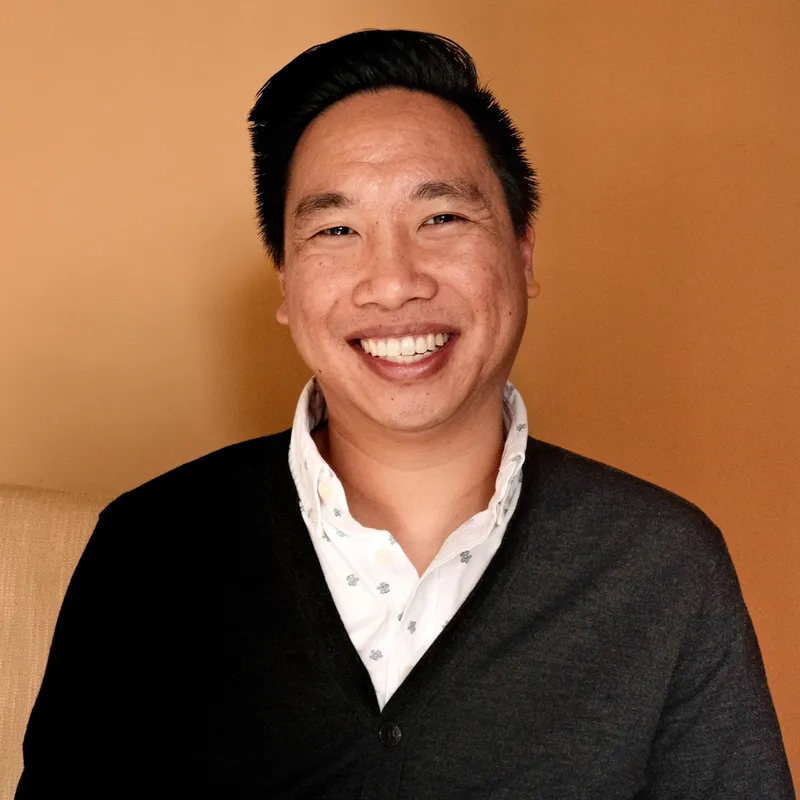
The host
Dr. Gabe Lowe is a psychologist and the creative mind behind Where Did Your Mind Just Go? — a passion project born from a belief that the world needs more spaces where curiosity and uncertainty are embraced, not solved away. Each episode, he brings his gift for deep listening and unhurried conversation to topics that matter, sitting across from bright, thoughtful minds and following the dialogue wherever it wants to go.
Where Did Your Mind Just Go?
09
Psychologist Anjali Ferguson, PhD, on why kids notice race by six months, why the adults are the ones who aren't ready, and raising proud, safe kids in a hard year.
08
Psychologist Christopher Schadt, PsyD, on making mental health content, what the algorithm rewards, parasocial trust, and the harm in five easy steps.
07
Psychologist Kerry Horrell, PhD, on therapist anxiety, holding the wish to live alongside the wish to die, and asking for time instead of a promise.
Follow the show
New episodes drop the first and third Wednesday of the month. Follow the show on your platform of choice, or get an email when one lands.
Or follow on Apple Podcasts Spotify
If the episode left you with better questions about your own life, we can sit with those too. Book a free consultation, or call or text (760) 334-6262.