
11

What can trauma teach us? With David Wang, PhD
David Wang, PhD, on why trauma is so hard to name, why the culture gap is often a trauma gap, and what real post-traumatic growth sounds like.
Episode 12 · 35:46
Where Did Your Mind Just Go?
Julieta Aguilera Rice, PhD, on why grief is so hard to sit with, what a grief group offers that individual therapy can't, and what healing really means.
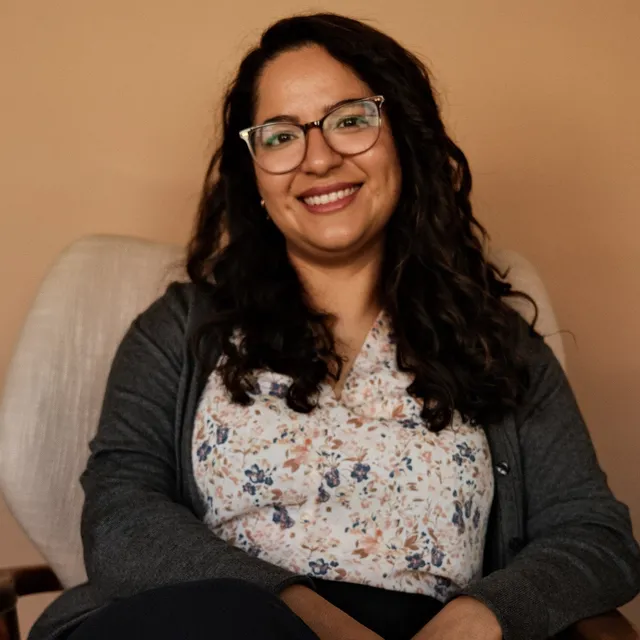
In El Salvador, where Dr. Aguilera Rice grew up, November 2 is Día de los Difuntos. People don’t work. It starts at school the day before, with an altar of food offerings for the people who have died. Then whole families go to the places where their loved ones are laid to rest, relatives she rarely saw included, and there are parades and street food vendors, and people cry and laugh together. Nobody had to ask how to show up for someone who was grieving. You just showed up.
This is the first episode of The Village Shrink, a spinoff series of Where Did Your Mind Just Go? that lets listeners in on how therapists think through their work. Dr. Gabriel Lowe sits down with his friend and colleague C. Julieta Aguilera Rice, PhD, a licensed psychologist at Coastal Therapy Group in Carlsbad, to talk about grief, and about what grief group therapy looks like from the inside. It is a topic close to both of their hearts. Gabriel still remembers the first grief group he ever facilitated, and holds it as a sacred memory.
Dr. Aguilera Rice has been doing grief work for a good chunk of time. She did her internship at Children’s Hospital Los Angeles, with a rotation in oncology, and also worked in a community mental health clinic serving historically marginalized communities, where grief and trauma work were often the same work. In fellowship she continued in oncology and ran a group for parents of children and young people in cancer treatment. Parents who had recently lost a child joined too, so even though grief was not the stated focus, it ran through the conversations.
There is something really special, she says, about sitting with someone and helping hold their grief, so that they are not holding it alone.
Gabriel’s wife also trained in pediatrics, and he remembers her describing physicians who seemed to have to button up their emotions and move on to the next patient. So he asks how a therapist decides how much of their own grief to let into the room.
Dr. Aguilera Rice sees a real role for compartmentalization. It can be protective, and it lets you show up for families five or more days a week. But she also needs outlets. Some of the most healing experiences of her hospital years were the spaces where physicians, psychologists, social workers and nurse practitioners came together as a professional community to talk about the deaths that had been hard.
She carries her own grief and loss, and she can’t fully leave it behind; she also can’t let it take over. What it gives her is a connecting point. You may not know the specifics of someone’s loss, she says, but you can understand the feeling. It is a balance: honoring your humanity while remembering that your role is to help hold, not to expect that of the family in front of you. Some losses will stir more in you than others, and you don’t always know which until you are there.
Gabriel describes the professional hat that never really comes off, and the judgment call underneath every disclosure: is this leaking out of me, or am I using it on purpose, to humanize the moment or help someone feel understood? He says he tends to be a little more free with self-disclosure than some, and stays intentional about keeping the focus on the client.
Everyone will grieve at some point, Gabriel says, so why are we often so bad at it, giving advice too quickly, or saying something meant to console that lands as dismissive?
Because grief is uncomfortable, Dr. Aguilera Rice answers. It is uncomfortable for the person grieving and for everyone around them, and it is hard to tolerate in our bodies. The person who is grieving doesn’t have a choice. The person who wants to help discovers there is really nothing they can do.
The thing that would fix grief is to bring the loss back.
Since we can’t do that, we reach for something: it’s time to move on, or there must be a reason this happened. Those responses come from good intentions, she says, but they often miss.
Oftentimes those responses have to do more with self-soothing rather than with showing up for the other person.
The answer is to listen and stay there with the person. That takes the ability to regulate the activation that comes from watching someone you love in pain and knowing there is nothing to do but sit with them.
Dr. Aguilera Rice is bicultural. She grew up in El Salvador until she was 10, then in Montreal until her 20s, before landing in California. In much of Central and Latin America, she explains, the day of the dead is built into the fabric of the culture: a whole country stopping to mourn and celebrate together, every year.
That changes the meaning of loss. It becomes less something that happened to me, and more something that happens, that we come together around. You talk about the person who has died. You expect the whole gamut of emotion, and that is okay. She is not sure the discomfort so many of us feel around grief is experienced the same way there.
Gabriel is Chinese American, about three and a half generations in, and was raised in a very Americanized way, with few memories of any cultural ritual around grief. What he absorbed instead was the individual version: the stages of grief, which everyone moves through at their own pace. There is some truth in that, he says, but it misses the communal rituals, and the sense of loss as part of life rather than something that happens only to you.
The individual model carries an expectation, Dr. Aguilera Rice says, and she hears it often in individual therapy: a loss happens, you grieve, and at some point you stop. “It’s like you fill up the grief meter and you’re done,” Gabriel offers. Even as the field moves away from rigid stages, the idea lingers, and that is how grief gets pathologized. Why am I still grieving ten years later? Why do I still cry at the holidays?
Grief is a lifelong process, she says, and a yearly day of mourning, kept generation after generation, fits how grief is understood now, even in Western psychology.
Grief lives inside of you for as long as the person who you lost will live inside of you, and that’s okay.
Reminders may be hard. That does not mean anything is wrong with you.
Someone raised in a more individualistic culture may crave that communal sense, Gabriel says, or feel alone with a loss nobody seems to have language for. So what does a grief group give that individual therapy does not?
It provides a communal space where grief is normalized, where no one necessarily knows the right thing to say, but will help hold the grief.
It brings more than two people together to share their stories and feel their feelings, with people who will understand because they have been through something similar. Dr. Aguilera Rice can help hold grief in individual therapy, and talk through what tends to make it better or worse, but she can’t recreate that community one-on-one.
Gabriel is clear that neither of them is knocking individual therapy. He works exclusively online, and sees groups the way he sees online versus in-person therapy: there are real differences and real trade-offs. In a group, people are vulnerable in front of others going through the same thing, not only in front of a therapist, and that softens the built-in power dynamic of provider and recipient. Many people who come to therapy are helpers at heart, and a group lets them do something for each other, without anyone having to fix anything. Dr. Aguilera Rice agrees, and adds that group work may not be for everyone.
Dr. Aguilera Rice stresses that this is her approach, and that grief groups vary a lot from clinician to clinician. Hers is a mix. Part of it is space to process grief and build community. Part of it is more structured: tools and strategies for managing grief, especially grief that feels particularly sticky, and general information about grief and different ways of understanding it.
A typical meeting, as she describes it:
In terms of sharing expectations, there are none.
If you are not ready to share, you can just listen. If the space comes to feel safe enough to be vulnerable, that is encouraged, but never expected. Gabriel adds that every group develops its own culture. The facilitators provide the structure, like rituals or a conversation starter as the holidays approach, and the group helps shape the rest as it matures.
Clients bring this to Gabriel often: it has been ten or twenty years, and it still hurts. Dr. Aguilera Rice starts by exploring what healing means to the person in front of her, how much space grief is taking in their life, and how it affects day-to-day functioning. Part of a clinician’s job is telling grief that is still being processed from grief that is stuck and may need more targeted help. She mentions that the DSM includes a grief disorder; the diagnosis is prolonged grief disorder, added in its 2022 revision.
Her more direct answer:
You know that you’ve healed when you’ve learned to recognize that you will always be on the mend.
We change through life, she says, and so does our grief. Someone who lost a parent years ago may grieve again in a new way when they have their first child. Grief is not a bad thing, even though it is painful. It is a reminder that you carry a piece of the person: memories, shared values, an internal inheritance.
Even though the person may not physically be here anymore, your love for the person remains.
If you are waiting to reach some fully healed point, she asks, does that mean severing all ties with the person? Is that something you want?
Gabriel shares the image he uses with clients: a scab and a scar. A scab still hurts when you pick at it. A scar is still there, and you might even feel sentimental about it, but it doesn’t hurt the way it used to. Dr. Aguilera Rice likes the metaphor, and adds the factors that shape how deep the wound goes: whether the loss was expected or ambiguous, how much support you had then and have now, and what else was happening in your life. Individual therapy is a good place to unearth those, she says. You can do both, Gabriel adds. One doesn’t exclude the other.
Dr. Aguilera Rice is recruiting now for an in-person grief group in Carlsbad, for adults 18 and older who have lost a loved one. It meets on Thursdays from 5:00 to 6:30 PM. If you are unsure, you can reach out to our care coordinators, and if you want to know more, Dr. Aguilera Rice offers a brief 15-minute consultation to get to know each other and talk about the group.
Gabriel is forming an online grief group for people anywhere in California, especially those who can’t make it to Carlsbad. It will be smaller, and an hour long instead of an hour and a half. The day and time will be set once it fills.
Both groups are on our grief support group page, or you can call us at (760) 334-6262. If you would rather start one-on-one, our doctoral-level clinicians also offer grief therapy in Carlsbad, Encinitas, and Vista and online across California, and you can see our other groups on the group therapy page. A free consultation is an easy first step. And there are more conversations like this one across Where Did Your Mind Just Go?
Listen to the full episode Spotify Apple Podcasts YouTube
Where Did Your Mind Just Go? is a production of Coastal Therapy Group. This episode was edited by Serena Rio.
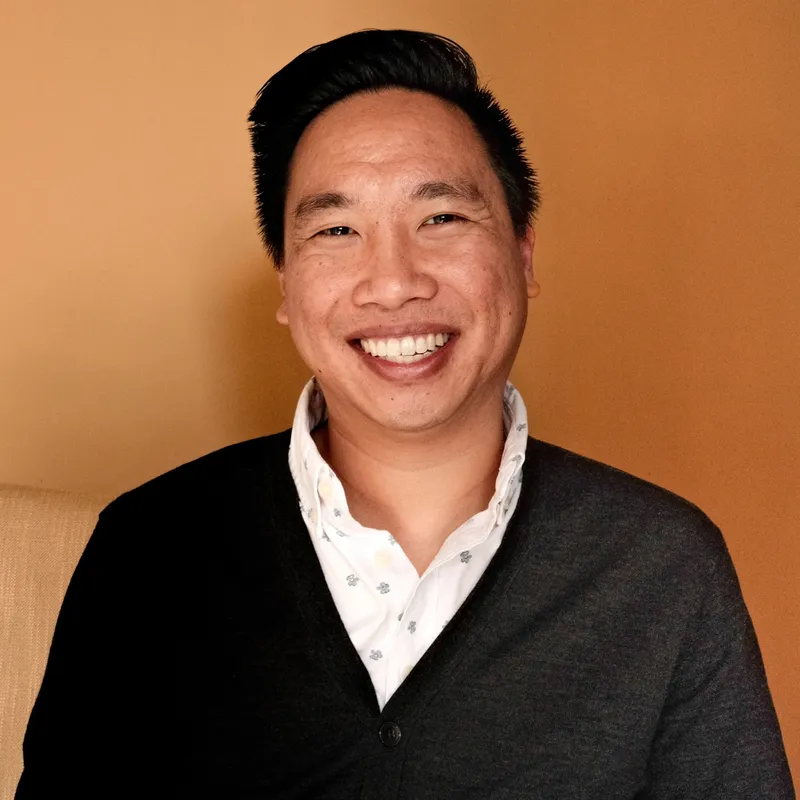
The host
Dr. Gabriel Lowe is a psychologist and the creative mind behind Where Did Your Mind Just Go?, a passion project born from a belief that the world needs more spaces where curiosity and uncertainty are embraced, not solved away. Each episode, he brings his gift for deep listening and unhurried conversation to topics that matter, sitting across from bright, thoughtful minds and following the dialogue wherever it wants to go.
Where Did Your Mind Just Go?
11
David Wang, PhD, on why trauma is so hard to name, why the culture gap is often a trauma gap, and what real post-traumatic growth sounds like.
10
Therapist Cheyenne Garstad, LCSW, on why religious trauma is rarely the reason people start therapy, how good memories hide it, and rebuilding community.
09
Psychologist Anjali Ferguson, PhD, on why kids notice race by six months, why the adults are the ones who aren't ready, and raising proud, safe kids in a hard year.
Follow the show
New episodes drop the first and third Wednesday of the month. Follow the show on your platform of choice, or get an email when one lands.
Or follow on Apple Podcasts Spotify
If the episode left you with better questions about your own life, we can sit with those too. Book a free consultation, or call or text (760) 334-6262.