
10
Is it religious trauma if you loved church? With Cheyenne Garstad, LCSW
Therapist Cheyenne Garstad, LCSW, on why religious trauma is rarely the reason people start therapy, how good memories hide it, and rebuilding community.
Episode 4 · 59:00
Where Did Your Mind Just Go?
Dr. Carly Claney joins the show to talk about why money stays taboo, how shame and privilege shape our spending, and what it means to give from a free place.

We talk about almost everything before we talk about money. Politics, faith, the state of the world. Money stays behind a door most of us would rather keep shut. In this episode, Dr. Gabriel Lowe sits down with Dr. Carly Claney, a psychologist and the founder of Relational Psych in Seattle, to open that door and look at what is actually inside.
Carly grew up with two very different models of how money comes into a home. Her father was a chiropractor and serial entrepreneur, his income rising and falling with each new venture. Her mother was a nurse at the same hospital for decades, steady and predictable. Watching them cover for each other taught Carly early that money could be variable, that it could flex, and that a family did not have to pin its whole sense of security on one person bringing home one kind of paycheck.
That early lesson became a lifelong fascination. Where most people find money stressful, Carly finds it fun. The points, the compound interest, the spreadsheets, the puzzle of it. She is candid that this comes partly from privilege, and she does not look away from that. She also frames her own relationship with money as something larger than personal interest. As a woman who runs a business and likes talking about money, she is pushing back on a history that did not leave much room for her. American women could not open a bank account on their own until 1974. Two generations ago, the life she is building would not have been possible.
The conversation keeps returning to the emotions that cluster around money: shame, anxiety, the pull between scarcity and abundance, the question of how much control any of us really has. Carly points out that financial stress is the easy version to talk about. Tight month, high taxes, those sentences come out without much cost. The harder layer is the relationship underneath. Shame about having less than your peers. Shame, just as often, about having more. The sense that money is something happening to you rather than something you have any say in.
Gabriel brings his own story into it. He grew up the son of a pastor, with a homemaker mother, and never felt he was lacking. When he asked his parents how much they had, the answer was always the same single word: enough. It was never satisfying as a kid, but it set a culture, and it shaped an expectation that being a psychologist at the top of his field would always feel a little foreign to where he came from.
Money is rarely a private matter for long. Bring in a partner, a parent, a child, and two whole relationships with money start colliding. Carly and Gabriel talk through how couples often arrive at the bottom line first, pointing fingers at the numbers, when the real conversation is about values. One person spends on travel and experiences. Another spends on raising children. Neither is wrong. They are funding different versions of a good life.
Culture sits underneath all of it. The scripts we inherit about what a group is supposed to value, whether we are allowed to like nice things, what generosity is supposed to look like. Carly is honest about her own evolving relationship with faith and giving, including the years she tithed without a joyful heart and the slow work of arriving at a generosity that feels chosen rather than coerced. She also names how money can get tangled up with control and even manipulation, the kind of religious trauma that can leave someone unsure whether their giving was ever really theirs. You cannot be argued into giving freely, she suggests. It has to come from somewhere real.
Some of the most resonant moments come when the two of them connect money to grief. The family you had or did not have. The choices you made. The doors you close every time you choose one thing over another. Carly’s own story includes a cancer diagnosis three years ago, navigated with the safety of good insurance, and the work now of letting go of an attachment to that particular form of security as her circumstances change.
The episode closes on something practical and oddly freeing. Budgeting, Carly argues, does not have to feel like a cage. The version where you track every cent kept her more anxious, not less. The version that works is the one tied to your actual values, where setting aside money for the thing you care about turns spending into something you get to look forward to rather than feel guilty about. Gabriel’s own quiet goal, he admits, has long been simply to eat out without feeling guilty about it.
If money has ever felt like a topic you were not supposed to raise, this is an hour spent raising it on purpose. For more conversations like this one, browse the rest of Where Did Your Mind Just Go?, and if you have ever wondered how a practice thinks through its own fees, our Cost + Info page lays it out plainly.
“There’s not a lot of things that are value neutral about money. But in my mind, my fee is value neutral. It’s set because I want to make a certain amount, and other people have the option of opting in.”— Dr. Carly Claney
Listen to the full episode Spotify Apple Podcasts YouTube
Where Did Your Mind Just Go? is a production of Coastal Therapy Group. This episode was edited by Serena Rio.
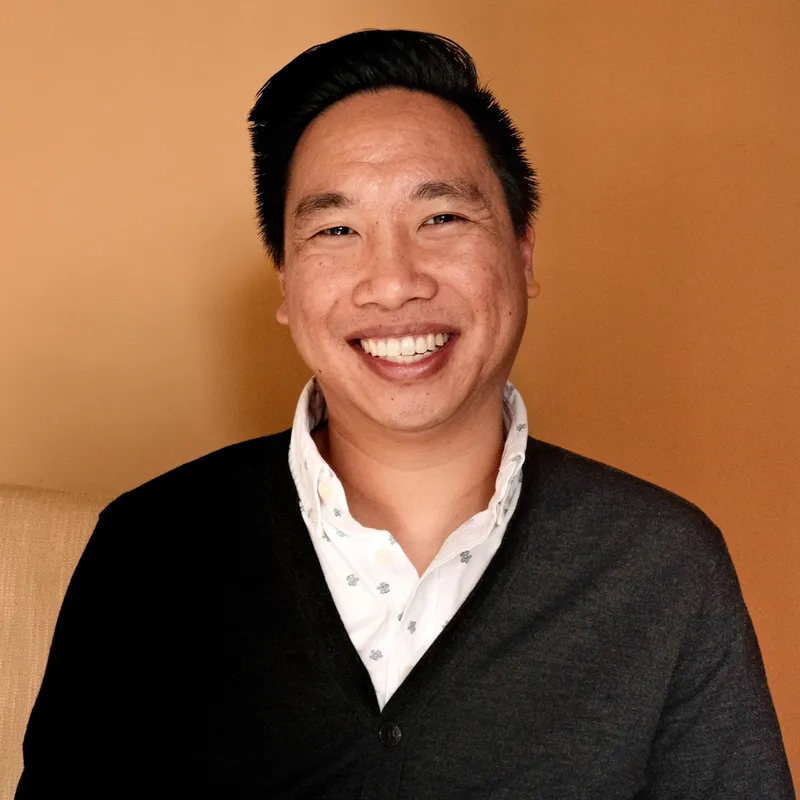
The host
Dr. Gabe Lowe is a psychologist and the creative mind behind Where Did Your Mind Just Go? — a passion project born from a belief that the world needs more spaces where curiosity and uncertainty are embraced, not solved away. Each episode, he brings his gift for deep listening and unhurried conversation to topics that matter, sitting across from bright, thoughtful minds and following the dialogue wherever it wants to go.
Where Did Your Mind Just Go?
10
Therapist Cheyenne Garstad, LCSW, on why religious trauma is rarely the reason people start therapy, how good memories hide it, and rebuilding community.
09
Psychologist Anjali Ferguson, PhD, on why kids notice race by six months, why the adults are the ones who aren't ready, and raising proud, safe kids in a hard year.
08
Psychologist Christopher Schadt, PsyD, on making mental health content, what the algorithm rewards, parasocial trust, and the harm in five easy steps.
Follow the show
New episodes drop the first and third Wednesday of the month. Follow the show on your platform of choice, or get an email when one lands.
Or follow on Apple Podcasts Spotify
If the episode left you with better questions about your own life, we can sit with those too. Book a free consultation, or call or text (760) 334-6262.