
Carlsbad or Online
Jean Jho, PsyD
Licensed Psychologist | Professionals, Therapists & Couples | she/her
I help adults navigate hurdles they are facing. I approach my work with gentle curiosity and strive to create a safe space to explore and process experiences that can be deeply personal.
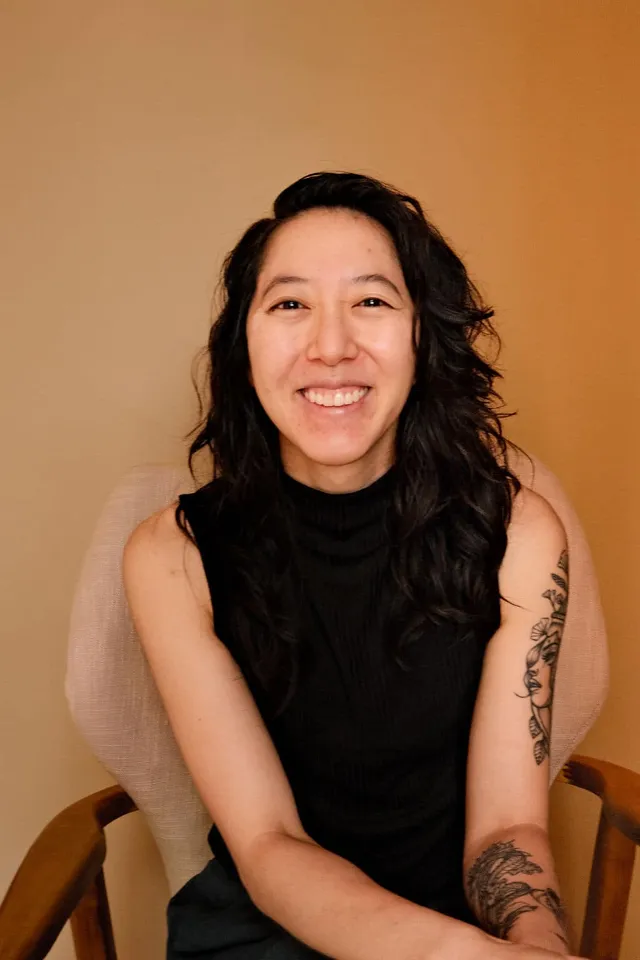
A short introduction
About Dr. Jho
Jean Jho, PsyD is a licensed psychologist at Coastal Therapy Group’s Carlsbad office, working with adults and couples in person and online throughout California. Her practice centers on capable, high-functioning people who look fine from the outside and are running on empty underneath it: professionals carrying imposter syndrome, chronic people-pleasing and the trouble with boundaries that comes with it, and the question of who you are once you stop organizing your life around everyone else’s expectations. She also works with therapists in training and early career, with couples, and with adults navigating anxiety, depression, grief, life transitions, and religious trauma.
She holds a doctorate and a master’s in clinical psychology from Biola University and completed both her APA-accredited pre-doctoral internship and her postdoctoral fellowship at Temple University’s Tuttleman Counseling Services, a university counseling center. She is also comfortable sitting with faith as a serious part of a person’s life, whether a client is deconstructing, grieving a community, or still practicing.
In her own words
Rather than “what is wrong with me?”
Do you ever find yourself wondering, “What is wrong with me?” I find that we often ask ourselves this question, looking for an answer to confirm the suspicion that there is definitely something deeply and pervasively wrong with us. I believe there are valid reasons and explanations for our actions, thoughts, and ways of relating with ourselves and others. Oftentimes, these are deeply rooted in our early experiences, causing us to repeat certain patterns that cause us to feel stuck, leaving us feeling helpless, anxious, frustrated, or all of the above. Rather than ask “What is wrong with me,” I want to help you understand what may be underlying the patterns that seem to affect your behaviors, cognitions, and/or relationships with yourself and others.
Professionals & therapists
Competent everywhere except on the inside
Some people arrive with a good job, a good reputation, and a private conviction that they have fooled everyone. Praise slides off. A promotion adds surface area to be exposed rather than proof of anything. Meanwhile the habit of reading the room before checking in with yourself has quietly become the way you operate, and saying no now costs more than saying yes ever did.
I work with professionals on that combination: imposter syndrome, the people-pleasing underneath it, and the boundaries that never quite hold. We do not start with scripts for saying no. We start with why the yes felt mandatory, which is usually older than the job.
I also work with therapists, both in training and early in their careers. It is a strange position: you are expected to hold everyone else steady while managing supervision, evaluation, and the fear of being found out, often without anywhere to put your own material. Having somewhere to be the client rather than the clinician matters more in those years than almost any other.
Identity & self-understanding
Helping you get to know you
We should know ourselves the best. After all, we are the ones that are in the driver seat of our lives. However, the number of times I have received a look of surprise and bewilderment when I ask a client what they want, not for anybody else, but for themselves… it is quite a lot! And that question is usually followed by an, “I don’t know” or “I’m not sure.” Such a simple question can be so difficult to answer at times. I find myself asking that question after a client shares how they feel paralyzed and overwhelmed while being upset with themselves for not doing the million things they feel like they should be doing (i.e., what others expect for them to be doing).
Oftentimes, when so much focus and effort goes into putting others before yourself, you can find that your identity feels fuzzy and that what you want and need from yourself and others goes unexpressed and, therefore, unheard. There are deep-rooted reasons why you have found yourself in this role. I would love to be a part of your process of helping you understand these reasons as well as help you start to embrace your own identity, wants, and needs in a way that feels balanced; so that you can be in a more balanced relationship with yourself and others.
Couples
The same pattern, in a different room
Couples usually arrive describing one recurring fight. Underneath it there is almost always something older: what each person learned to expect from closeness, what they do when they feel unseen, and the moves they make to protect themselves that land on their partner as distance or pressure.
I work with couples on that layer rather than on scripts. When both people can see the pattern they are caught in, the specific argument usually stops being the point. Where faith, family expectations, or differing beliefs are part of the strain, that can be named directly here rather than worked around.
Religious trauma
When faith is part of the picture
For some people, a religious upbringing is part of where the guilt, the harsh inner voice, and the difficulty trusting their own judgment came from. I work with adults sorting through that: people who have left a community and are grieving it, people who are still in one and finding it harder to stay, and people who hold their faith and want a psychologist who will not treat it as a symptom. The work is not about arriving at a particular conclusion. You can read more on our religious trauma therapy page.
Ways to work together
Formats to fit where you are
Alongside weekly therapy, Dr. Jho offers a couples format and a short, structured consultation, useful when you want meaningful help within a defined stretch of time.
The foundation. Weekly individual sessions, in person in Carlsbad or online throughout California.
Ongoing work with couples on the patterns that keep repeating between them, in person in Carlsbad or online.
About couples therapy →A structured psychological consultation (intake, brief assessment, and a feedback session) for clarity and direction without committing to ongoing therapy.
About Insight Sessions →Credentials as a Psychologist
- Licensed Psychologist (PSY30433)
- Post-doctoral Fellowship, Temple University, Tuttleman Counseling Services
- Pre-doctoral Internship, Temple University, Tuttleman Counseling Services (APA Accredited)
- Doctorate in Clinical Psychology (PsyD), Biola University (APA Accredited)
- Masters of Arts in Clinical Psychology (MA), Biola University (APA Accredited)
- Bachelor of Arts in Psychology (BA), University of California, Los Angeles (UCLA)
Areas of Specialized Experience
- Professionals
- Imposter Syndrome
- People Pleasing
- Therapists (In-Training & Early Career)
- Life Transitions
- Young Adults
- Anxiety
- Depression
- Identity & Self-Understanding
- Couples Therapy
- Religious Trauma
- Grief & Loss
- Trauma & Abuse
- Christian & Catholic Clients
- Online Psychotherapy
Before you reach out
Questions clients tend to ask first
I am doing fine on paper and still feel like a fraud. Is that worth therapy?
Yes, and it is one of the most common reasons capable people come in. Imposter syndrome does not respond to evidence, which is why the promotion and the praise do not fix it. What tends to help is understanding where the standard you are failing to meet actually came from, and why being found out feels like such a specific danger. You do not need a crisis to justify looking at it. You can read more about how our practice approaches this on our therapy for professionals page.
Do you work with therapists, including trainees and early-career clinicians?
Yes, and it is work I particularly value. Training and the first years of licensure put you in an odd position: you are expected to hold other people steady while being evaluated, supervised, and quietly worried about being found out, often with nowhere to bring your own material. Having a space where you are the client rather than the clinician matters a great deal in those years. I completed both my own internship and postdoctoral fellowship at a university counseling center, so the training path is familiar territory.
I already know I people-please. Can therapy actually change that?
It can, though usually not by practicing scripts for saying no. People-pleasing normally started as an intelligent way to stay safe or stay connected, so the useful question is not "why am I like this" but "what was this protecting me from, and is that still true." Once you can catch the moment you override yourself, the boundary gets easier to hold because it stops feeling dangerous. Our self-esteem and boundaries page covers this in more depth.
What does therapy with you actually look like?
I work psychodynamically, which means we are not only building coping skills. We pay attention to what sits underneath: your history, your relationships, and the early templates that keep shaping how you respond now. Sessions are 45 minutes, usually weekly. Early on we spend time simply understanding a pattern before trying to change it.
Do you work with couples, or only individuals?
Both. I see adults individually and I work with couples on the patterns that keep cycling between them, which is often the same relational material showing up in a different room. You can read more about how we approach that work on our couples therapy page.
Do you work with religious trauma, and what if I still have my faith?
Yes, and my job is not to move you toward or away from belief. Some people I work with are deconstructing, some are grieving a community, and some are practicing Christians or Catholics who want a psychologist who will not treat their faith as a symptom. All of those are welcome. What we work on is what is actually causing you pain, not what you should believe. Our religious trauma therapy page has more.
What does a session cost, and do you take insurance?
Dr. Jho’s fee is $260 for a 45-minute individual session and $300 for a couples session. We are out of network with insurance and can provide a superbill you can submit for reimbursement. Full details on fees, superbills, and what to ask your insurer are on our cost and insurance page.
What is the first step, and where do sessions take place?
Schedule a free 15-minute consultation. We talk through what you are navigating and whether we are a good fit, and from there we can usually book a first full session within a week. Sessions happen in person at our Carlsbad office on State Street and online throughout California, and many clients do a mix of the two depending on the week.
Recent essays by Dr. Jho
- Schizoid personality: closeness as a wish and a fearSeptember 22, 2026
- The PDM-3: A Clinician's Guide to the Psychodynamic Diagnostic ManualAugust 31, 2026
- Understanding Psychoanalytic Diagnosis: A Different Way of Seeing PeopleJuly 26, 2026
- Understanding Transference in TherapyDecember 16, 2020