
Vista or Online
Dr. Jenna Suway
Licensed Psychologist | EMDR & LGBTQ+ Affirming Care | they/them
My goal is to create an open and safe environment from which to explore, process, and learn. It is an honor to get to know you and to work collaboratively to address whatever brings you to therapy. I look forward to talking with you.
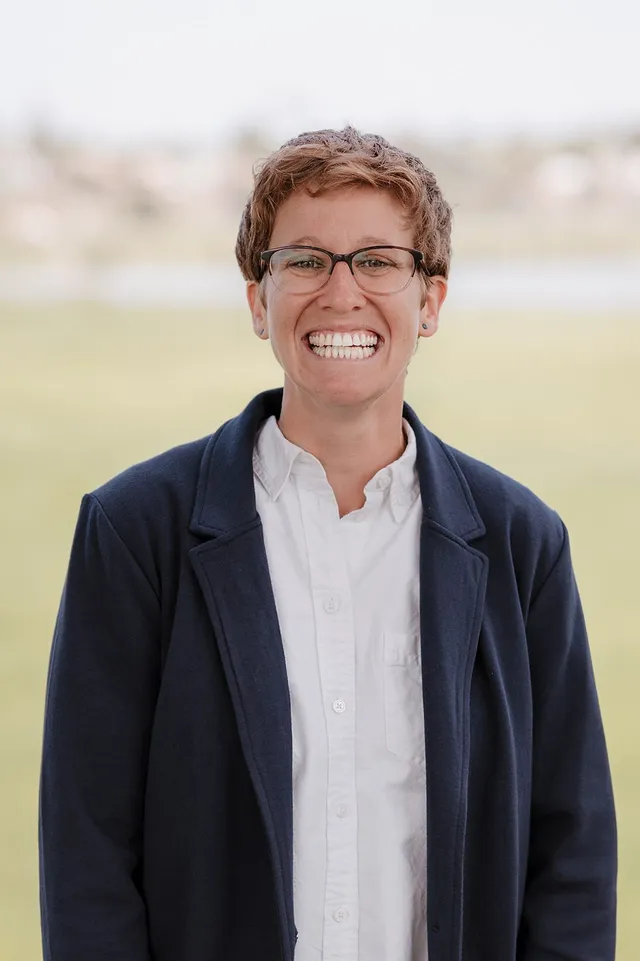
A short introduction
About Dr. Suway
Jenna Suway, PhD (they/them) is a licensed psychologist (California PSY33767) at Coastal Therapy Group’s Vista office, seeing teens, young adults, adults, and couples in person and online throughout California. They are the practice’s EMDR provider, offering the eight-phase protocol for trauma and PTSD both in Vista and by secure telehealth. Their broader approach is integrative, with a strong focus on psychodynamic work and a multicultural perspective, and they work extensively with LGBTQ+ clients across the gender and sexuality spectrum. Dr. Suway leads two groups at the Vista office: a weekly DBT skills group, and The Queer Umbrella, an LGBTQ+ process group currently forming. They hold a PhD in Clinical Psychology from Alliant International University and a PhD in Human Development from the University of Maryland.
In their own words
Being true to yourself
People are multifaceted and have many identities – gender, sexuality, race, religion, and ethnicity are some of the many examples. It can be hard to navigate and embrace all of your identities, but learning to love and value your authentic self is possible. I greatly value helping people in this process. Together we can explore what it is that makes you, you. Being true to yourself and proudly owning your identities is a beautiful thing and can be transformative. I would love to offer support in your unique journey.
How they work
People aren’t cookies
Life brings many challenges that can be overwhelming to face alone. Navigating these challenges well happens within a compassionate relationship where we feel supported and free from the judgment from ourselves and others. It is in the context of this type of relationship that I will work with you to share your concerns, clarify your goals, and get the most out of psychotherapy.
My theoretical approach to treatment is integrative with a strong focus on psychodynamic approaches and a multicultural perspective. People aren’t cookies, so I don’t use a cookie cutter model for therapy. Instead, I provide individualized therapy tailored to your unique history, capacities, and needs. In many ways, this will evolve as we get to know each other. I see great value in the therapeutic relationship, and it is a true privilege for me to be part of your journey to feeling more confident and empowered in the face of life’s difficulties.
I am passionate about my work as a therapist, and I have a strong conviction that therapy can help bring about positive change. I am currently accepting new patients and offer free 15-minute phone consultations to answer any questions you may have regarding my services.
EMDR therapy
When the past still lands in the present
Some memories do not settle. You know the event is over, you can date it on a calendar, and your body still reacts as though it is happening now. That gap between what you understand and what you feel is the thing EMDR is built for.
EMDR is a structured, eight-phase protocol. Rather than asking you to retell the story until it loses its charge, it uses bilateral stimulation while you hold the memory in mind, which helps the brain finish processing something it got stuck on. It does not require a detailed verbal account of what happened, which matters a great deal for people who have found talk therapy retraumatizing or who have never been able to find the words. And it does not start on day one: there is a preparation phase first, and we do not move into processing until you have the footing for it.
I offer EMDR in person at our Vista office and by secure telehealth for clients anywhere in California. It is often used for trauma and PTSD, and also for anxiety and depression with roots in specific experiences. You can read the full eight-phase breakdown here.
Group therapy
Two groups at the Vista office
Some things only move in a room with other people in it. I lead two groups at Vista, and they do genuinely different work.
The DBT skills group is running now. It is class-style rather than open-ended: adults meeting Mondays from 3:00 to 3:50pm to learn and practice concrete skills across mindfulness, distress tolerance, emotion regulation, and interpersonal effectiveness. You do not need a diagnosis or a crisis to belong there, and enrollment is rolling, so you are not waiting for a term to start. I have also written about why DBT skills are for everyone, not just people in crisis.
The Queer Umbrella is the one I am starting. It is an LGBTQ+ process group for adults, and it is forming now — gathering its first cohort rather than meeting yet. When it begins it will meet Tuesdays from 9:00 to 10:30am, in person, with four to ten members. A process group is not a peer-led drop-in: the same people come each week, and the work happens in what unfolds between them. If you are tired of explaining yourself before you can get to the actual thing, that is the room this is meant to be. Spots in the first cohort are open now.
Ways to work together
Four ways to start
Most people begin with a free consultation and move into weekly sessions. EMDR and group therapy can run alongside individual work or stand on their own.
The foundation. Weekly individual therapy for teens, young adults, and adults, in person at our Vista office or online anywhere in California.
An eight-phase protocol for trauma, PTSD, and the memories that still hit like they are happening now. Offered in person in Vista and by secure telehealth statewide.
About EMDR →A weekly DBT skills group for adults building concrete emotional tools, and The Queer Umbrella, an LGBTQ+ process group forming now.
All our groups →A short, no-pressure conversation about what you are navigating and whether working together makes sense. Most people start here.
Book a consultation →Also in my practice
Teens, young adults, and couples
Alongside trauma and identity work, I see teens and young adults through anxiety, depression, family tension, and the ordinary disorientation of working out who you are. Identity questions rarely arrive on a tidy schedule, and adolescence and the twenties are when most of them surface at once.
I also work with couples, including partners navigating anxiety, parenthood, and change, and couples where one or both people are somewhere in the LGBTQ+ spectrum and want a therapist who does not need that part explained first.
Credentials as a Psychologist
- Licensed Psychologist, California (PSY33767)
- Post-doctoral Fellowship, San Diego State/University of California, CA
- Pre-doctoral Internship, California State University San Marcos, CA (APA Accredited)
- Doctoral Respecialization in Clinical Psychology (PhD), Alliant International University, CA (APA Accredited)
- Doctorate in Human Development (PhD), University of Maryland, MD
- Bachelors of Arts in Psychology (BA), Bucknell University, PA
Areas of Specialized Experience
Before you reach out
Questions clients tend to ask first
What is EMDR, and how do I know if it is right for me?
EMDR is a structured, eight-phase therapy for trauma. Instead of asking you to narrate a memory over and over, it uses bilateral stimulation while you hold the memory in mind, which helps your brain finish processing something it got stuck on. People often come to it when a past event still hits like it is happening now, or when they understand intellectually that they are safe and their body has not caught up. I offer it in person at our Vista office and by secure telehealth anywhere in California. You can read the full eight-phase breakdown here, and we can talk through fit on a free consultation.
Do I have to describe the trauma in detail to do EMDR?
No, and this surprises a lot of people. EMDR does not require you to give a detailed verbal account of what happened. We need enough for me to understand the target we are working on, but much of the processing happens without narration. For people who have found talk therapy retraumatizing, or who simply cannot find the words, that difference matters.
Do you work with LGBTQ+ clients?
Yes. I am an LGBTQ+ affirming psychologist and I work with clients across the gender and sexuality spectrum, including people who are questioning, in the middle of coming out, transitioning, or long past all of that and simply want a therapist who does not need it explained. I use they/them pronouns myself. You can read more about our practice’s LGBTQ+ affirming therapy.
Tell me about The Queer Umbrella.
The Queer Umbrella is an LGBTQ+ process group I am starting at our Vista office. It is forming now and gathering its first cohort, so it has not begun meeting yet. When it does, it will meet weekly on Tuesdays from 9:00 to 10:30am, in person, for four to ten adults. A process group is different from a peer-led drop-in: it is clinician-led, the same people come each week, and the work happens in what unfolds between members. Full details and how to reserve a spot are here.
What about the DBT skills group?
That one is up and running, and it is a different animal. It is class-style rather than open-ended: a small group of adults meeting Mondays from 3:00 to 3:50pm in Vista to learn and practice concrete DBT skills across mindfulness, distress tolerance, emotion regulation, and interpersonal effectiveness. You do not need a diagnosis or a crisis to join, and enrollment is rolling. More about the DBT skills group.
Can I do individual therapy with you and be in one of your groups?
Often, yes, and for some people the combination works better than either one alone. Individual work and group work do different things: one gives you depth and privacy, the other gives you other people and real-time practice. We will talk about whether running both makes sense for you, and there are times I will suggest keeping your individual therapist separate from your group leader. That is a conversation, not a rule.
Where is your office, and do you see people online?
I see clients at Coastal Therapy Group’s Vista location, 1800 Thibodo Road, Suite 110, Vista, CA. I also offer online therapy for anyone in California, including EMDR. Both groups meet in person in Vista.
What does a first session with you look like?
We start with a free 15-minute phone consultation so we can talk about what is bringing you in and whether we seem like a good fit. From there, the first full session is about getting to know you: your history, your goals, and what you are hoping to get from therapy. If EMDR is on the table, we do not start processing on day one. There is a preparation phase first, and we do not move until you have the footing for it.
What does a session cost, and do you take insurance?
Sessions with me are $260. The DBT skills group is $100 per session and The Queer Umbrella will be $125 per session. Coastal Therapy Group is a private-pay practice, and many clients with PPO plans receive reimbursement for a significant portion of sessions; we provide the documentation you need to submit. Our cost and insurance page has the full breakdown, including current rates across the practice.
What is the first step?
Schedule a free 15-minute consultation. We talk through what you are navigating and whether we are a good fit, and from there we can usually book a first full session within a week.