
10
Is it religious trauma if you loved church? With Cheyenne Garstad, LCSW
Therapist Cheyenne Garstad, LCSW, on why religious trauma is rarely the reason people start therapy, how good memories hide it, and rebuilding community.
Episode 5 · 55:00
Where Did Your Mind Just Go?
Psychologist Joseph Kelly, PhD, on how we become gendered, why trauma can be part of the story, and what the phrase born this way leaves out.
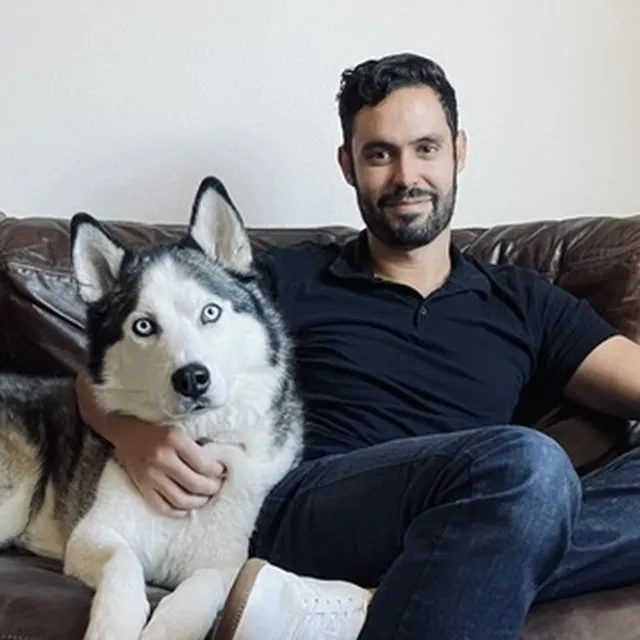
Most of us are handed a story about gender before we are old enough to question it. A tidy, binary account of who you are supposed to be and what you are supposed to want. For Joseph Kelly, that inherited story was a long source of private agony, and working his way out of it is part of what led him to graduate school and, eventually, into the consulting room.
In this episode, Dr. Gabriel Lowe sits down with Joseph Kelly, PhD, a psychologist in private practice at Therapy with Joseph in Tustin, California. Much of the conversation circles a book that has been important to Joseph: Gender Without Identity by Avgi Saketopoulou and Anne Pellegrini, a psychoanalytic account of how we come to be gendered in the first place.
They begin where a lot of people begin, with “born this way,” and then keep pulling on the thread. Joseph grew up in a conservative religious world that ran on a pseudo-Freudian script: the distant father, the overbearing mother, a developmental story about how gender and sexuality supposedly go astray. Secular culture answered that script with an essentialism of its own, the reassurance that we arrive already formed and no one has the right to change us. Joseph is genuinely sympathetic to that answer. It resists conversion, and it locates our development somewhere outside our conscious control, which matters. He is also restless with it. What if trauma and early experience are part of how any of us arrives at a gender and a sexuality, not a defect to be cured but material to be lived with and put to use?
One of the things Joseph loves about contemporary psychoanalytic thought is how thoroughly it unsettles the idea of “normal.” On this account, everyone’s gender is a working-out, an ongoing process that recruits development, relationship, and trauma into a story about who we are. That makes it a much bigger table than it first appears. Gabriel, who identifies as cisgender and heterosexual, is honest about his own hesitation, the sense of peeking over a fence into someone else’s experience, and the relief of an idea that says this labor belongs to everyone.
Gabriel brings his own story into it, the way the best guests get their hosts to do. He talks about growing up as an Asian man who rarely saw himself in who the culture called attractive, and about finding his own sense of masculinity less through the scripts he was handed than through feminist and womanist thought. Not to become something other than a man, but to have some say in what kind of man.
Both of them feel the pull of categories, and the cost of them. We are living through a proliferation of labels, Joseph notes, in gender and sexuality but also in neurodiversity and diagnosis, because organizing ourselves is something human beings simply do. His worry is what happens when those labels harden. In the psychoanalytic view he keeps returning to, identity is something that gets bound and organized, then can be unbound and bound again. It never finishes. Hold a label too tightly, he suggests, and you lose everything it was built to leave out.
Then comes the most careful stretch of the conversation, about children. Gabriel describes an ordinary evening routine, giving his young daughter a bath, and how much meaning gathers around something so mundane: a father and a daughter, the plain fact of a body, his own history with gender and sexuality all present in the room whether he wants it there or not. Joseph, drawing on Jean Laplanche, offers something that lands as relief rather than alarm. Adults cannot help but transmit more than they intend. Children register that noise long before they have language for it, and they spend years making meaning of it. The point is not perfect parenting, which is available to no one. The point is being present inside the complexity.
There is no real cure for trauma. Trauma comes to constitute the psyche, just like a number of other environmental forces. It is something that needs to be lived with and occupied and recruited as another resource.
That reframing is where much of the episode settles. Joseph is a little wary of a story of total pride and total self-acceptance, not because pride is wrong, but because he is always listening for where the old, policing voice still lives, the one internalized on the playground and long after. Naming it, he argues, is what creates room. The same instinct shapes how he thinks about the louder culture war around gender, which he mostly declines to enter, and names the privilege of being able to.
They close on a practical question: how do you even bring this up with your own therapist? Gabriel offers his working answer, that nothing is off limits and the hesitation itself is worth talking about. Joseph turns it back on the clinician, on what keeps any of us from noticing when a whole area of a person’s life has gone quiet, and gently asking about it.
This is the kind of conversation the show exists for. Not advice, not a tidy framework, just two people following a real question past its obvious answers to see what is underneath. If it leaves you wanting to keep going, our team writes about closely related territory in religious trauma and LGBTQ-affirming therapy, and you can hear more conversations like this across Where Did Your Mind Just Go?
You can find Joseph at therapywithjoseph.com, where he offers in-person and telehealth therapy across California, New York, and Kansas.
Listen to the full episode Spotify Apple Podcasts YouTube
Where Did Your Mind Just Go? is a production of Coastal Therapy Group. This episode was edited by Serena Rio.
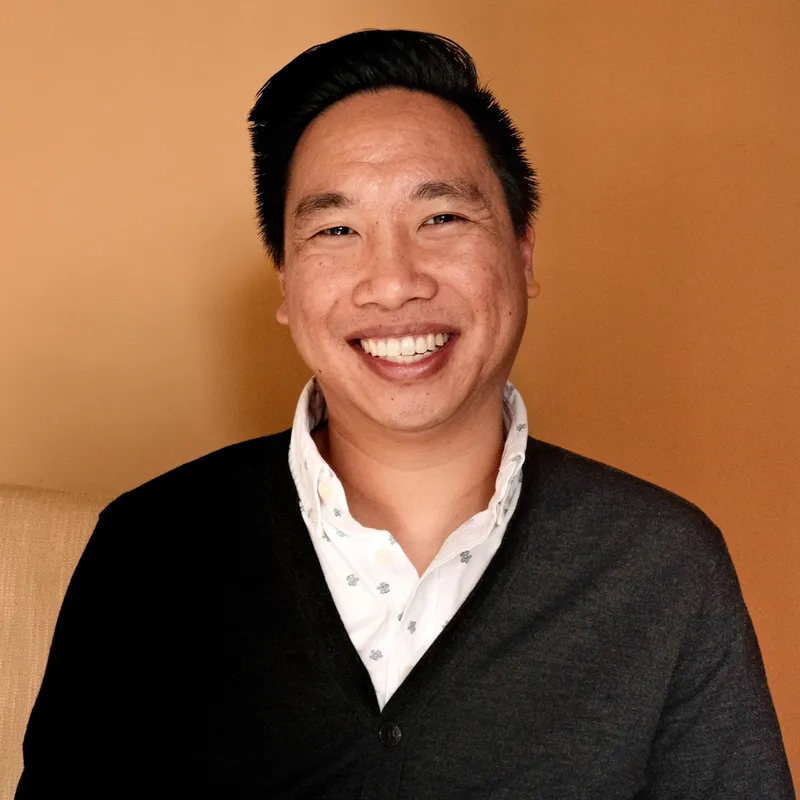
The host
Dr. Gabe Lowe is a psychologist and the creative mind behind Where Did Your Mind Just Go? — a passion project born from a belief that the world needs more spaces where curiosity and uncertainty are embraced, not solved away. Each episode, he brings his gift for deep listening and unhurried conversation to topics that matter, sitting across from bright, thoughtful minds and following the dialogue wherever it wants to go.
Where Did Your Mind Just Go?
10
Therapist Cheyenne Garstad, LCSW, on why religious trauma is rarely the reason people start therapy, how good memories hide it, and rebuilding community.
09
Psychologist Anjali Ferguson, PhD, on why kids notice race by six months, why the adults are the ones who aren't ready, and raising proud, safe kids in a hard year.
08
Psychologist Christopher Schadt, PsyD, on making mental health content, what the algorithm rewards, parasocial trust, and the harm in five easy steps.
Follow the show
New episodes drop the first and third Wednesday of the month. Follow the show on your platform of choice, or get an email when one lands.
Or follow on Apple Podcasts Spotify
If the episode left you with better questions about your own life, we can sit with those too. Book a free consultation, or call or text (760) 334-6262.