

When Trying Harder Makes It Worse: Understanding Experiential Avoidance
Experiential avoidance is the effort to escape uncomfortable inner experiences, and it quietly drives a lot of suffering. A Carlsbad psychologist explains.
Category
Browse psychotherapy articles and insights from licensed psychologists at Coastal Therapy Group serving North San Diego County.
The archive
Experiential avoidance is the effort to escape uncomfortable inner experiences, and it quietly drives a lot of suffering. A Carlsbad psychologist explains.

What therapy can and cannot do for PMDD and premenstrual distress, and how it works best alongside medical care rather than in place of it.

Schizoid personality is organized around wanting closeness and fearing being engulfed by it. Jean Jho, PsyD explains the pattern, how it develops, why it is not introversion or avoidant personality, and what helps in therapy.

Masking, social anxiety, and people-pleasing look alike from outside and need different treatment. Lisette Montañez, PsyD on how to tell them apart, and why it matters.

When pain will not fully go away, ACT helps you reclaim your life from it. A Carlsbad psychologist on acceptance and commitment therapy for chronic pain.
Couples who come from different racial or cultural backgrounds are doing the ordinary work of a relationship plus a second job that mostly goes unacknowledged. The five pressures that make it harder, and what the research says helps.

Humor is one of the friendliest defense mechanisms: it names something painful while keeping you on your feet. Sean Noe, PhD explains why we joke through hard moments, when it helps, and when it keeps people at a distance.

What happens when premenstrual feelings get dismissed as hormones, and what it means when the premenstrual version of you is telling the truth.

People rarely ask me whether EMDR works. They ask what actually happens in the room. Here is the whole arc, from the first conversation to the session where we notice the memory has gone quiet.
The PDM-3 gives clinicians a systematic way to describe personality organization, mental functioning, and subjective experience. Jean Jho, PsyD walks through the P, M, and S axes, the Psychodiagnostic Chart, and how the manual fits alongside the DSM-5-TR and ICD-11.

Why you feel more emotional before your period, what those feelings might be telling you, and when to take them seriously. From Naomi Wu, PsyD.
Your values are not goals or rules. A Carlsbad psychologist explains what values really are in ACT, how to find yours, and why they steady a hard life.
The harder you fight anxiety, the stronger it tends to get. A Carlsbad psychologist on how acceptance and commitment therapy changes your relationship to anxiety instead of trying to eliminate it.

Projection takes a feeling you cannot accept in yourself and hands it to someone else. Sean Noe, PhD explains why the mind does it, what it costs, and what helps when you are the one being handed a feeling that is not yours.
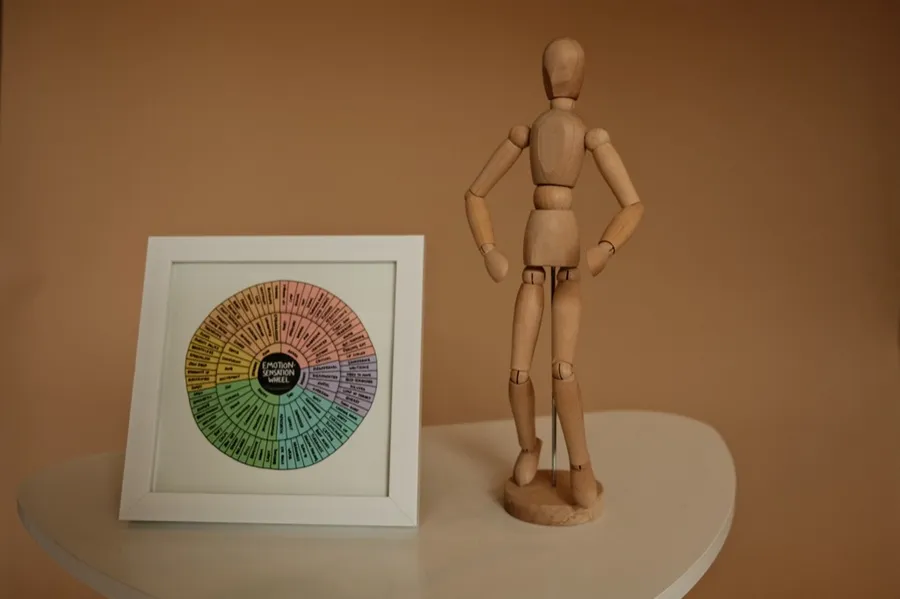
Accepting a painful reality does not mean condoning it. A Carlsbad psychologist on what acceptance actually asks of you, why fighting a feeling backfires, and how acceptance is what makes action possible.
Letting go and giving up look almost identical from the outside and feel completely different inside. A Carlsbad psychologist on acceptance, resignation, and the line between them.
Many people feel like someone else in the days before their period. Naomi Wu, PsyD on what that experience means, and how to meet that version of you instead of fearing it.

Splitting is the mind's habit of seeing people, including yourself, as all good or all bad, with no middle. Sean Noe, PhD explains where the defense comes from, what it protects, and how therapy helps it soften.
Psychoanalytic diagnosis asks who you are, not just what symptoms you have. Jean Jho, PsyD explains levels of personality organization, character styles, and how the PDM differs from the DSM.
Cognitive defusion is the ACT skill of seeing a thought as just a thought. A Carlsbad psychologist explains what fusion costs you, what defusion feels like, and a few ways to practice it.
Acceptance and commitment therapy, explained from inside the room. A Carlsbad psychologist on what ACT actually is, how the six processes work in real sessions, and who it tends to help.
PMS, PMDD, and premenstrual exacerbation are not the same. Naomi Wu, PsyD explains the differences, the warning signs, and when to seek help.
Your menstrual cycle can shape your emotional life in real and noticeable ways. Naomi Wu, PsyD on how the cycle affects your emotions, what the medical model leaves out, and when premenstrual distress is worth listening to.
Defense mechanisms are the mind's automatic ways of protecting itself from feelings that seem too dangerous to feel. Sean Noe, PhD explains splitting, projection, repression, and more in plain language.

Psychologist Reid Kessler, Psy.D. explains why AI chatbots can't replicate the therapeutic relationship, drawing on Bion, Winnicott, Benjamin, and Harlow's research. Coastal Therapy Group, North County San Diego.

A psychotherapist reflects on how a Broadway show revealed the power of nonverbal emotional experience and what it teaches us about the connection between our bodies, feelings, and the moments when words fall short.

Discover how relational therapy deepens self-understanding and supports healthier relationships. Learn what to expect and how this approach differs from CBT.

Dr. Gabriel Lowe explores what healing from religious trauma looks like — from acknowledging pain and reclaiming agency to rebuilding a meaningful life.

What is transference in therapy? Dr. Jean Jho explains how feelings toward your therapist can reveal patterns from your past and deepen your self-awareness.