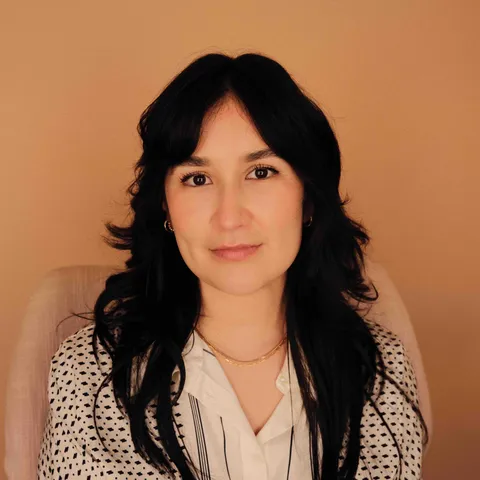
Lisette Montañez, PsyD
ADHD, AuDHD & executive functioning
Works with late-diagnosed and high-masking adults, including women who were missed as kids.
Read bioCarlsbad · Encinitas · Vista · Online
If you were the girl who daydreamed, over-prepared, and held it together until you could not, nobody was looking for ADHD. We work with the women who got missed, and with everything a late diagnosis brings up.
4.9 on Google · 100+ reviews across our North County offices
Start here
You have probably been told you are too sensitive, too scattered, or too much. Maybe you have been treated for anxiety or depression that never fully lifted. Maybe your life looks organized from the outside while you white-knuckle your way through the things that seem effortless for everyone else.
This page is about one specific version of that: adult women whose ADHD went unrecognized for years, and what therapy looks like once you start to suspect it. If you are looking for ADHD therapy more broadly, including for teens, college students, children, and men, start with our ADHD therapy page instead.
We are a private-pay, out-of-network practice, and we provide superbills you can submit to your insurance for potential reimbursement. Many clients with PPO plans are reimbursed for a meaningful portion of their sessions. See our Cost + Info page for current rates.
Why it gets missed
ADHD in women rarely looks like the version most clinicians trained on. Some of the reasons it goes unrecognized:
None of this means every missed girl grew up to have ADHD. It means the absence of a childhood diagnosis is weak evidence in either direction, and it is not a good reason to stop asking the question at 38.
The cost of masking
Masking is the effort of appearing organized, attentive, and easy to be around when none of it is automatic. It is the three calendar reminders for one appointment, the arriving forty minutes early so lateness is impossible, the two-line email rewritten four times, the conversation rehearsed in the car.
It works, which is exactly the problem. The better you mask, the less anyone sees, including the people whose job it was to notice. And the effort does not show on the outside. It shows up as exhaustion, as irritability with the people you love most, and as a private conviction that you are performing competence rather than actually having it.
In therapy we get curious about what the masking costs and what it has been protecting. Not to strip it away, but so that it becomes something you can choose rather than the only setting you have.
What we work on
Late diagnosis
Most of the women we see did not arrive with a tidy diagnosis in hand. They arrived after a burnout, after a partner's frustration, after a therapist who kept treating anxiety, or after their own child was evaluated and something clicked into place.
A late diagnosis tends to bring two things at once. Relief, because there is finally a framework that makes sense of a lifetime. And grief, for the years spent working twice as hard for half the credit, and for the self-blame that filled the space where an explanation should have been. Therapy is a place to hold both, instead of rushing past the second one because everyone around you is congratulating you on the first.
The clinicians on this page do therapy, not testing. If you want a formal answer or documentation for accommodations, our ADHD testing team handles ADHD evaluations separately, and you are welcome to start therapy before, during, or instead of one.
The part nobody warned you about
Many women describe symptoms that seem to move on a schedule: harder in the week before a period, harder through perimenopause, different again in the months after a baby. If you have ever felt like a different person for ten days a month, you are describing something we hear constantly.
Researchers are still working out why. The relationship between estrogen and dopamine is one active line of that work rather than a settled answer, so we hold it loosely. What we can say clinically is that the pattern is common enough to be worth tracking, and worth naming out loud in therapy, instead of treating every difficult stretch as a personal failure.
We are therapists rather than prescribers. If your pattern points toward a medical or medication question, we will say so and help you find the right person for it.
Who you would work with
Every clinician below holds a doctorate in psychology and is licensed in California. These are the ones on our team whose practice includes adult women with ADHD, across Carlsbad, Encinitas, and Vista, and online anywhere in California. Our full ADHD team, including clinicians who see teens, college students, and children, is on the ADHD therapy page.
ADHD, AuDHD & executive functioning
Works with late-diagnosed and high-masking adults, including women who were missed as kids.
Read bio
Adults + couples
Works with adults on neurodivergence, self-criticism, and relationships.
Read bio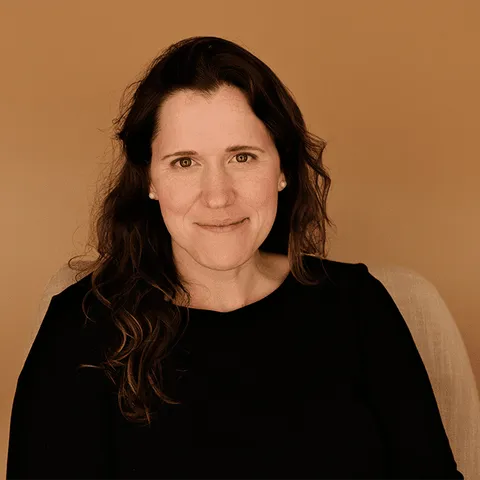
Adults + couples
Works with mothers of young children and graduate students, including ADHD and learning differences.
Read bio
Adults + couples
Works with adults managing ADHD alongside demanding careers and vocations.
Read bio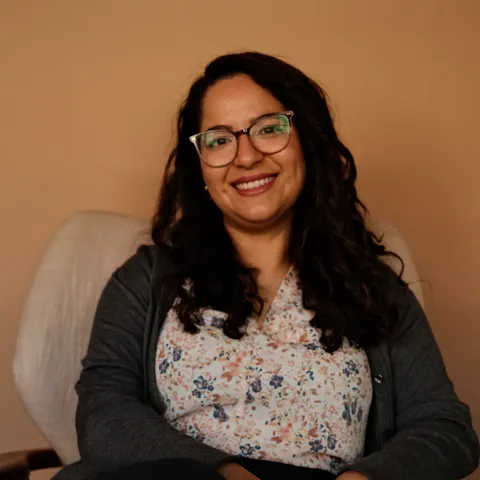
All ages + families
Trilingual clinician whose work spans ADHD, anxiety, assessment, and family dynamics.
Read bioIn plain language
ADHD is missed in women and girls largely because the inattentive presentation is quiet. A girl who daydreams, loses track of conversations, and falls apart privately after holding it together all day does not disrupt a classroom, so she does not get referred. Girls also tend to compensate early, through over-preparation, perfectionism, and people-pleasing, which hides the difficulty from the adults around them. On top of that, the research base that shaped the familiar diagnostic picture drew heavily on hyperactive boys, so the presentation many women have was slower to be recognized clinically.
Masking is the effort of appearing organized, attentive, and easy to be around when none of it is automatic. In adult women it usually looks like redundant systems rather than obvious struggle: three calendar reminders for one appointment, arriving forty minutes early so lateness is impossible, rewriting a two-line email four times, and rehearsing conversations in advance. It is effective, which is why it goes unnoticed. The cost shows up instead as exhaustion, irritability, and a private sense of performing competence rather than having it.
A late ADHD diagnosis in adulthood commonly brings relief and grief at the same time. The relief is having a framework that finally makes sense of a lifetime of experiences. The grief is for the years spent working twice as hard for half the credit, for the self-blame that filled the gap where an explanation should have been, and for what might have been different with earlier support. Both reactions are normal, and therapy is often where the second one gets room, since the first is the part everyone congratulates you for.
It is frequently both, and the two are easy to confuse. Anxiety is one of the most common conditions to co-occur with ADHD, and it is also one of the most common labels applied when unrecognized ADHD is the primary driver, because chronic overwhelm and self-doubt look like anxiety from the outside. The distinction matters for treatment, and it is not something a website can settle. A thorough evaluation, or careful therapeutic work over time, looks at the whole history rather than treating each symptom in isolation.
Questions
No. Many of the women we see are mid-evaluation, on a waitlist for one, or simply suspect that ADHD explains something they have never been able to explain. You do not need a formal diagnosis to start useful work, and you can begin therapy before, during, or instead of an evaluation.
Not on this side of the practice. The clinicians on this page do therapy, not assessment. If you want a formal answer or documentation for accommodations, that is a separate service handled by our ADHD testing team, who offer comprehensive ADHD evaluations for adults. We are happy to help you decide whether an evaluation is a useful next step for you.
Coaching focuses on systems, accountability, and goals, and for some people that is exactly the right tool. Therapy works on the layer underneath: the emotional patterns, the relationships, and the self-concept that got built over years of not knowing why things were harder. Both can be valuable, and they are doing different jobs. If the systems keep working for three weeks and then falling apart, the layer underneath is usually the reason.
Possibly, or possibly both at once. Anxiety is among the most common conditions to co-occur with ADHD, and it is also among the most common labels applied when unrecognized ADHD is the actual driver. We cannot answer that from a web page. What good therapy does is stop treating each symptom in isolation and start looking at the whole history, which is often where the pattern finally becomes visible.
Many women describe symptoms that move on a schedule: harder in the week before a period, harder through perimenopause, and different again in the months after a baby. Researchers are still working out the mechanism, and the relationship between estrogen and dopamine is one active line of that work rather than a settled answer. Clinically, the pattern is common enough to be worth tracking and worth naming, instead of treating every difficult stretch as a personal failure. We are therapists rather than prescribers, so if your pattern points toward a medication or medical question, we will say so and help you find the right person.
We are a private-pay, out-of-network practice. Sessions are $230 to $300 for a 45-minute session depending on the clinician. We provide detailed superbills you can submit for potential out-of-network reimbursement, and many clients with PPO plans are reimbursed for a meaningful portion. Full current rates are on our Cost + Info page.
That comes up often, particularly among women who have been masking for a long time, and the two overlap more than the old either-or framing suggested. Several of our clinicians work with both together rather than treating one label at a time. If you want the diagnostic question answered formally, our testing team offers a combined AuDHD evaluation. If what you want is support rather than a formal answer, you can begin therapy for autistic adults without a diagnosis.
No. This page focuses on adult women because that experience gets missed most often, but our ADHD therapy team works with teens, college students, adults, and children of any gender. Our general ADHD therapy page has the full team and details.
We see clients in person in Carlsbad, Encinitas, and Vista, and we offer online therapy throughout California. Many of our clients come from Oceanside, Escondido, Solana Beach, Del Mar, and the surrounding North County communities.
A quick, private self-check
Two short, private self-checks: one on adult ADHD traits, one on how much you may be masking them.
Reflective, not diagnostic. Your answers never leave your browser.
Ready when you are
A free 15-minute call is the whole first step. Tell us what has been going on, and we will tell you honestly whether therapy here is the right fit, in Carlsbad, Encinitas, or Vista, or online anywhere in California.
4.9 on Google · 100+ reviews · Serving North County since 2018
Our offices