




When I tell people I run a DBT skills group, I usually get one of two reactions. Either a blank look — what's DBT? — or a careful, slightly alarmed pause, because the person has heard of DBT and associates it with something serious. A diagnosis. A hospitalization. Someone they knew in college who was going through a really hard time.
Both reactions tell me the same thing: DBT has a branding problem.
Dialectical Behavior Therapy was developed in the 1980s by Marsha Linehan, originally for people with Borderline Personality Disorder and chronic suicidality. It worked — spectacularly, in some cases — and over the decades the research kept widening. It turns out the same skills that help someone survive a crisis also help a stressed-out accountant handle his mother-in-law at Thanksgiving. They help a teenager stop sending texts she regrets. They help a new parent sit with an unbearable feeling long enough for it to pass.
Linehan herself put it this way: "A diagnosis of a mental disorder is not required to benefit from DBT skills. As someone once said to me, 'aren't these skills your mother was supposed to teach you?' I always say yes, but for many people, their mother just did not or was not able to get around to it."
That line is my whole thesis for the group I'm starting in Vista. DBT is not a last resort. It's a set of practical emotional skills that most of us never got taught — through no fault of anyone's — and that we can still learn now, as adults.
What DBT actually is
DBT is a structured, evidence-based therapy that teaches four categories of skills. It's cognitive-behavioral in its roots, but the thing that makes it distinctly dialectical is the insistence that two things that seem contradictory can both be true at once. You can accept yourself exactly as you are and be working to change. You can be doing the best you can and need to do better. The word "and" does a lot of quiet work in this therapy. Most of us are used to living in "but."
The skills get taught in four modules:
Mindfulness is the foundation. This is the practice of noticing what's happening in your body, your thoughts, and your environment without judgement. A lot of DBT mindfulness is about learning to tell the difference between your emotion mind (feelings running the show), your reasonable mind (logic running the show), and what she calls wise mind — the integrated place where you actually make your best decisions. If you've ever sent a text you regretted at 11 p.m. and then looked at it in the morning and thought, who wrote that? — you've met your emotion mind. Wise mind is the part that would have waited until morning.
Distress tolerance is the survival module. It's what you use when the feeling is too big to fix and too present to ignore. These are skills for the worst ten minutes, not the whole year. Radical acceptance lives here — and it's the skill most people get wrong. Radical acceptance does not mean liking what's happening, approving of it, or giving up. It means stopping the exhausting inner argument with reality and putting that energy somewhere it can actually do something. It’s a willingness. There's a particular kind of relief that comes from this, and it's hard to describe until you've felt it.
Emotion regulation is the long game. It's how you build an emotional life that isn't constantly catching you by surprise. Some of it is practical — sleep, food, movement, reducing vulnerability factors — and some of it is subtler, like learning to name a feeling precisely instead of defaulting to "fine" or "I don't know." There's real neuroscience behind that last one. Affect labeling, as it's called, actually quiets activity in the amygdala. Naming the feeling changes the feeling. You are not making it up.
Interpersonal effectiveness is how you ask for what you need, set limits, and stay in relationship with people — including when you disagree with them. This module has some of the most practical tools in all of psychotherapy, including an acronym called DEAR MAN that is basically a script for having a hard conversation without losing yourself or the relationship. It's the skill I most often wish I'd had at twenty-three.
Why these skills are for everyone, not just for crisis
The research on DBT has grown far past its original population. There's solid evidence for DBT skills helping with anxiety, depression, ADHD-related emotion dysregulation, eating disorders, substance use, and the general bucket of "I'm functional but I'm exhausted and I keep reacting in ways I don't like."
We live in a culture that teaches very little about emotions directly. If you had a childhood where feelings got named, where rupture and repair were modeled, where someone taught you that you could be angry and still be loved — you were lucky. Most of us got some version of that education and some version of gaps. The gaps are not a character flaw. They're a curriculum that wasn't offered.
DBT offers the curriculum. You can still learn it.
What makes a skills group different from individual therapy
I'm a relational, psychodynamic psychologist by primary training. Most of the therapy I do is about understanding patterns — the unconscious ways we re-enact old relationships, the feelings we can't quite let ourselves know, the slow work of being deeply known by another person and letting that change us. I love this work. I do it every day.
DBT skills work differently, and I think that's part of why they pair so well with deeper therapy. A skills group is structured. You show up, you learn a specific tool, you practice it in the group, you try it in your week, and you come back and talk about what worked and what didn't. It's closer to learning an instrument than to free-associating on a couch. Both are valuable. They do different things.
In my experience, skills groups are especially helpful for people who already do individual therapy and want more practical tools, for people who are new to therapy and want a structured starting point, and for people who have been in process-oriented work for a while and are ready for something complementary that works a different muscle. You don't have to stop doing anything to add DBT skills. They stack.
About the group
We're starting a DBT Skills Are For Everyone group at our Vista office. It meets Mondays from 3:00–4:50 p.m. It's $100 per session, which is about a third of the cost of individual therapy, and open to adults 18+. The group is small by design — three to eight members — so there's room for everyone to actually practice the skills and be known.
Over the course of the group we'll move through all four modules, starting with mindfulness and returning to it throughout. You don't need a diagnosis to join. You don't need to be in crisis. You don't need prior experience with therapy. You just need to be curious whether learning a set of skills you weren't taught earlier might change some things now.
If you'd like to learn more or see if the group is a fit, you can book a free 15-minute consultation with our care coordinator, or reach out to me directly through my clinician page. We'll talk through what you're looking for and whether this group — or individual therapy, or something else — is the right next step.
DBT skills are, as Linehan said, the skills your parents was supposed to teach you. Nobody's at fault that they didn't. But they're still learnable, and learning them, in my experience, quietly changes everything.
About the author
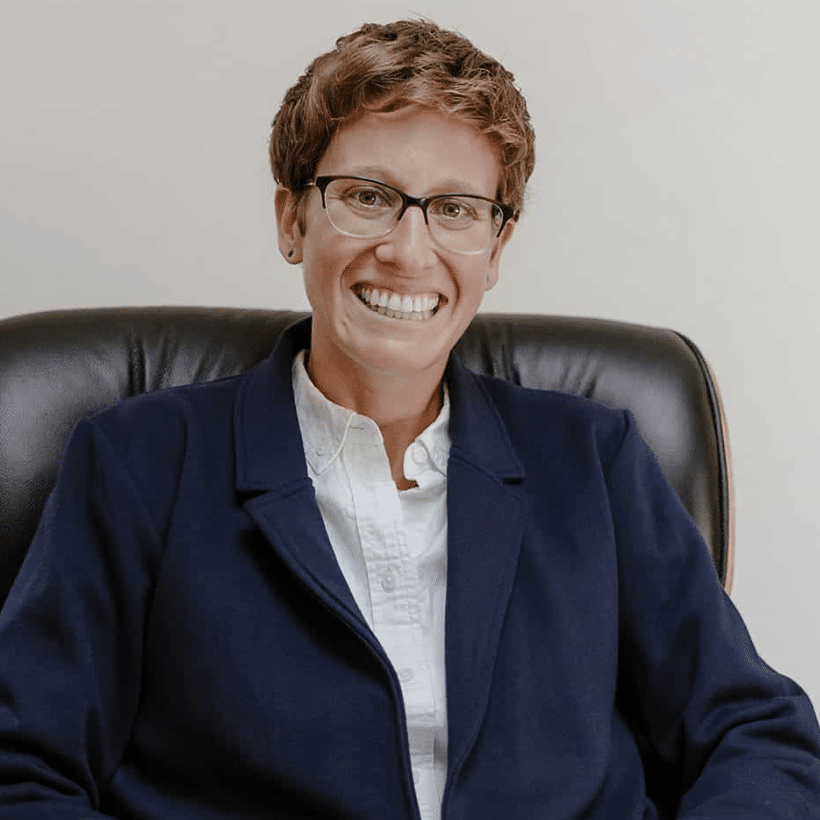
Jenna Suway, PhD (they/them) is a licensed psychologist (PSY33767) at Coastal Therapy Group's Vista office. They earned a PhD in Clinical Psychology from Alliant International University and a PhD in Human Development from the University of Maryland, completed their pre-doctoral internship at Cal State San Marcos, and trained at San Diego State University and UC San Diego for postdoctoral fellowship. Dr. Suway sees teens and adults at the Vista office, with specialized experience in anxiety, trauma, couples therapy, and LGBTQ+ affirming care. They lead two groups at the Vista location — DBT Skills Are For Everyone and The Queer Umbrella, an LGBTQ+ adults process group. Dr. Suway believes people aren't cookies, so they don't use a cookie-cutter model for therapy — instead offering individualized care tailored to each client's history, capacities, and needs.
Frequently asked
Common Questions About DBT and Our Group
Do I need a diagnosis to join a DBT skills group?
No. You don't need a mental health diagnosis, a referral, or any prior therapy experience to join. DBT was originally developed for a specific clinical population, but the skills themselves are useful for anyone who wants more practical tools for handling emotions, relationships, and stress. If you're curious whether the group is right for you, a free 15-minute consultation is the easiest way to find out.
What's the difference between DBT and CBT?
DBT is technically a form of CBT, but it adds two things traditional CBT doesn't emphasize: mindfulness and dialectics — the idea that two seemingly opposite truths can both be valid. CBT focuses on changing unhelpful thoughts and behaviors. DBT does that too, but it also teaches you how to accept the parts of your experience that aren't going to change, and how to tolerate difficult emotions without acting on them. In practice, DBT tends to feel more relational and less mechanical than standard CBT.
Can I do the DBT skills group while I'm seeing my own individual therapist?
Yes, and it's actually one of the most common scenarios. Many of our group members are in individual therapy elsewhere, and the two formats work well together. Skills groups are structured and skill-focused; individual therapy goes deeper into patterns and history. They complement each other rather than compete. With your permission, I'm happy to coordinate with your individual therapist if that would be useful.
Is DBT a good fit for anxiety or ADHD?
For both, yes — though DBT works on the emotional and relational side of these experiences rather than the cognitive or attentional side. If you have ADHD and find that emotional intensity, rejection sensitivity, or impulsive reactions are part of what's hard, DBT skills can be genuinely useful. For anxiety, DBT's distress tolerance skills (especially TIPP) work well in the moment, while emotion regulation and mindfulness work on the underlying patterns. DBT isn't a replacement for ADHD or anxiety treatment, but it pairs well with both.
Is the group covered by insurance?
Our DBT skills group is offered as a self-pay service at $100 per session. We don't bill insurance directly for the group, but we're happy to provide a superbill that you can submit to your insurance for possible out-of-network reimbursement. Coverage varies widely by plan, so it's worth checking with your insurance directly about out-of-network mental health benefits.
How long does the group run, and what if I miss a session?
The group runs across all four DBT modules, which takes roughly six months at our pace. Most members stay for the full cycle, though we ask for a minimum commitment when you join so the group can build trust and continuity. Missing an occasional session happens, and we have ways to help you catch up on what you missed. Frequent absences are harder on the group as a whole, so we'll talk through scheduling realistically before you start.
What's the difference between this group and a therapy process group?
A skills group teaches specific tools — mindfulness, distress tolerance, emotion regulation, interpersonal effectiveness. The structure is more like a class than a therapy session. A process group, like our Real Talk group at the Carlsbad office, is unstructured and focuses on what unfolds between members in real time. Both are valuable. They do different things. If you're not sure which is the better fit, that's a good conversation to have on a consultation call.
(760) 334-6262
info@coastaltherapygroup.com
© Coastal Therapy Group, APC 2025 All Rights Reserved
We are a group practice of psychologists that work as therapists in Carlsbad, Bressi Ranch, Encinitas, & Vista. Many of our clients come from the surrounding towns of Oceanside, San Marcos, Escondido, Rancho Santa Fe, Solana Beach, and Del Mar.