

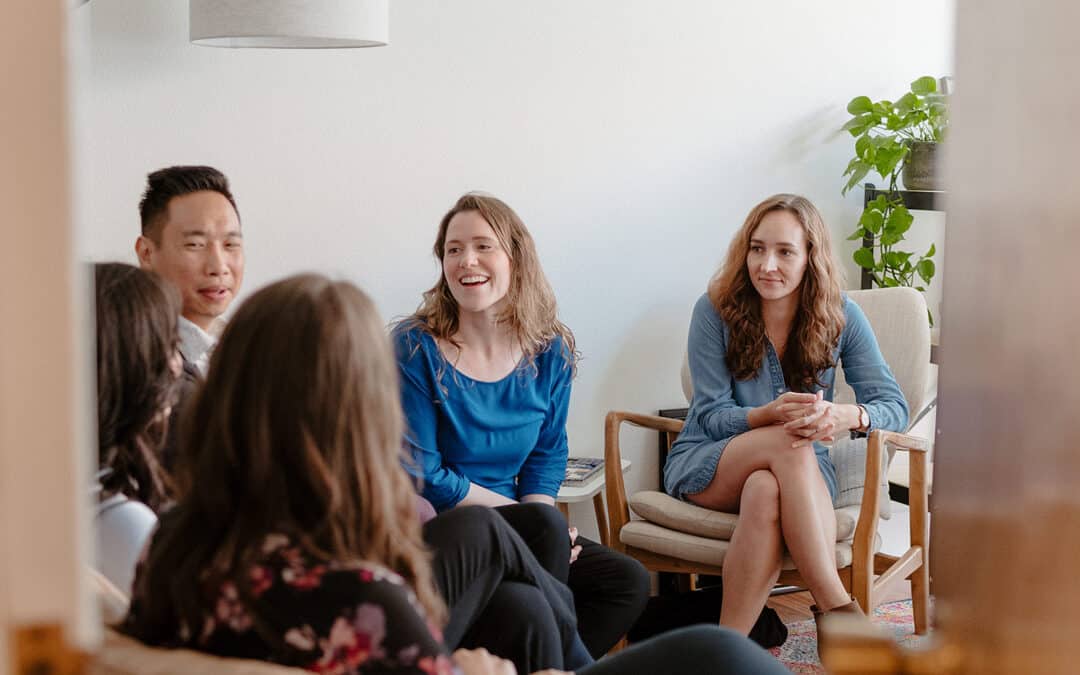
Joining a process group can feel both exciting and unfamiliar, especially if you’re wondering what actually happens in a group or whether it might be a good fit for you. Real Talk is our ongoing adult interpersonal process group designed to help people deepen self-understanding, strengthen relationships, and practice new ways of connecting in real time. In this conversation, the group’s facilitators—Sean Noe, PhD, and Bethany Ling, PsyD—share what drew them to this work, what makes process groups unique, and what people typically experience as they grow together in the “here and now."
What drew you both to running a process group like Real Talk?
Sean Noe, PhD:
Over the course of my training, I’ve gotten more and more experiences getting to lead or be part of groups, which has led me to want to deepen my practice as a group process facilitator. I think when I first entered my training years, group work felt harder to approach, as it can sometimes feel like more pressure to share and be vulnerable with several others, as opposed to talking in individual therapy between client and therapist. The more I gained experience with groups though, the more I’ve seen how groups can provide such a strong sense of mutual support, shared learning, and taking time to understand that oftentimes the parts of being vulnerable that you yourself may have a hard time with, other people are also working on too. It can be really precious when a person shares a vulnerability about how they attempt or struggle to connect with parts of themselves or others, and even more powerful when group members come alongside and share in this kind of work. Because I value that kind of experience, I want to facilitate spaces like Real Talk to create that sense of taking the risk to be vulnerable that can often open up spaces for greater intimacy and connection, both with yourself and in your relationships.
Bethany Ling, PsyD:
I wanted to co-facilitate a space where individuals can talk openly about the struggles they’re experiencing, the things that are going well in their lives, and the issues that truly matter to them in their current season. It is wonderful when individuals get to discuss these things in individual therapy. And it can be encouraging to know that you’re not alone in your struggles and can dialogue with others who are going through similar experiences.
There are also ways a group setting can offer a unique experience that individual therapy cannot. In individual therapy, you may find yourself talking about your relationships, your tendencies, relationship history, fears, worries (to name a few), and even your relationship with your therapist. Those insights are worthwhile and can be life changing. But when you leave the therapy room, you may not have people in your life with whom you can process those things. Or, others in your life may not know what it’s like to be in therapy or understand your experience of therapy. In everyday life, you’re likely surrounded by people in group settings including places like work, family, friends, or in religious communities. Group therapy offers a unique space where you can receive input from other group members, develop insight into how you communicate, and reflect on yourself through the process of building relationships within the group.
What makes a process group different from other kinds of group therapy?
Sean Noe, PhD:
Process groups in some ways have similarities but also important differences compared to other kinds of group therapies. For example, there can be groups that are skill based, where over the course of the group, new skills and information are learned about a certain topic, whether it’s learning social skills or learning new tools for emotion regulation, distress tolerance, etc. Oftentimes skills based groups are time limited and cease once the curriculum has been completed. A process group does incorporate skills, but rather than a particular behavioral skills or practice, the priority of the focus is on how we process things in the moment, in the here and now of the group and each member's experience. This kind of processing is often much more fluid, lively, and dynamic compared to a skills group that has a set curriculum that is covered.
A process group is also similar yet distinct from a support style group. There certainly is support that is offered in a process group. Both of these kinds of groups offer space to talk openly about your experiences, which can often create a sense of connectedness and reduce isolation. The emphasis on what is being shared may look different, though. In a support group, oftentimes people come in to discuss a particular topic, which can stay focused on giving and receiving support about a shared kind of hardship. A process group also involves sharing, but its emphasis lies less on the shared topic being discussed, and rather places focus on depth of insight including how you show up alongside others, how you interact within the group, and becomes a microcosm or place to experiment with new ways to relate with others.
Bethany Ling, PsyD:
Other kinds of group therapy—such as support groups or skills groups—often focus on specific themes, topics, or learning various skills. These groups may be more psychoeducational or centered on helping members practice and implement the skills they’re learning. They are sometimes time-limited and follow a particular curriculum or structure (though not always).
Process groups, on the other hand, focus on the relationships built between members and the facilitator and are considered ongoing. The facilitator(s) help individuals reflect on their own experiences, their experiences of other members, and, at times, their experience of the facilitator.
That sounds both meaningful and challenging. What do people usually experience in group?
Sean Noe, PhD:
That’s a good question and something that typically evolves as the group comes together over time. In initial phases of the group, there can be a sense of getting acclimated to something new, which can include understanding the group expectations and getting to know more about members of the group. In initial phases, it is quite common for feelings of anxiety or uncertainty to come up, which can be normal and often worked through with time. When the group feels cohesive, a lot more of the process work can really deepen. Whether it be navigating disagreements and differences that naturally emerge in a group, or finding ways to collaborate and communicate with one another, the group can take on the feeling of being a microcosm or mirrored version of how each group member often approaches others in relationships in the outside world. In this kind of space, members can feel a range of feelings, including moments of relief, courage, connection, tension, intimacy, and more, which often leads to better self understanding too. While the particular experiences of group members will vary, the overall experience can be described as supportive, at times challenging, but often rewarding too for those committed to this kind of work.
Bethany Ling, PsyD:
It’s normal to feel nervous when joining a group of people you don’t know and talking about things that feel hard or vulnerable. Feeling nervous or anxious during the first handful of sessions is natural. Over time, people usually become more comfortable with one another and with sharing their experiences.
As time goes on, it’s also common to find yourself disagreeing with others or disliking something another member shares. This is all part of the “process” of group, and we encourage you to use these moments as opportunities to be curious about what is happening for you.
Why focus so much on the “here and now”?
Sean Noe, PhD:
Here and now is like the bread and butter of the work done in a process group. When we talk about the here and now, we are talking about the immediate ways we connect with our emotions in the moment, and we get to explore how we bring those parts of us forth with one another. In a process group, we kind of anticipate that there are ways people have learned to show up in the world, whether it’s feeling concerned about taking too much space, feeling pressure to always take care of others but struggle to think of yourself, or maybe something else is going on, but allowing ourselves to connect to that in the present moment can do a few things. On one hand, it gives us a chance to become more aware of those parts of us and how those parts can be received in relationship with other group members. Also, being aware of the here and now gives you a chance in the present moment to potentially try something else that may feel more authentic, more like you as the person that you are, which can hopefully lead to more satisfying relationships.
Bethany Ling, PsyD:
In individual therapy, it can be tempting to talk only about the past instead of what’s happening for you in the present moment. You might be unpacking a past relationship, childhood experiences, or trauma. Reflecting on the past can provide valuable insight into how you want to move forward in your life. However, when we focus too much on our past or future selves, our present self can get lost. This can raise questions like: What am I experiencing right now? How might that inform how I want to live my life and show up?
Maybe a family member or friend said something off putting and you didn’t know how to handle it, so you pushed it down and never revisited those feelings. This group focuses on the here and now because we’re constantly inundated with information. Focusing on the present moment can help individuals stay mindful of their emotions, slow down, and cultivate curiosity about what is actually happening internally rather than getting caught up in what they wish were different.
What kind of person might benefit from joining a process group like Real Talk?
Sean Noe, PhD:
There can be a variety of reasons for people to be interested in a process group, and for whatever reason you might be seeking out a group like Real Talk, I think people who are curious, self reflective, and desiring to improve their relationships can benefit a lot! Consistency is another thing that is important for creating and maintaining an effective process group, so people who are interested in being a part of the depth oriented, relational work that with time unfolds very meaningfully would also be someone who would benefit as well.
Bethany Ling, PsyD:
If you’re looking for a place to connect with others, gain a deeper understanding of yourself, or are experiencing challenges communicating your thoughts or feelings to others in your life, this group may be a great fit.
If someone is interested, what’s the next step?
We’d love to talk with you and would invite you to schedule a consultation with Dr. Noe or Dr. Ling about your interest in the group!
If you’re interested in joining Real Talk, or just want to hear more information, visit or reach out to us at info@coastaltherapygroup.com or 760-334-6262, to get more information.
About the authors

Sean Noe, PhD is a postdoctoral fellow who works with teens and adults navigating anxiety, relationship challenges, life transitions, and questions of meaning. He brings a warm, grounded presence to therapy, helping clients understand the emotional patterns that shape their lives and move toward greater clarity, confidence, and connection. Sean creates thoughtful, compassionate spaces where people can explore who they are, what matters most, and how to live in ways that feel more authentic and fulfilling.
Dr. Noe is currently accepting new clients in Encinitas, Vista, Carlsbad, and over telehealth throughout California.
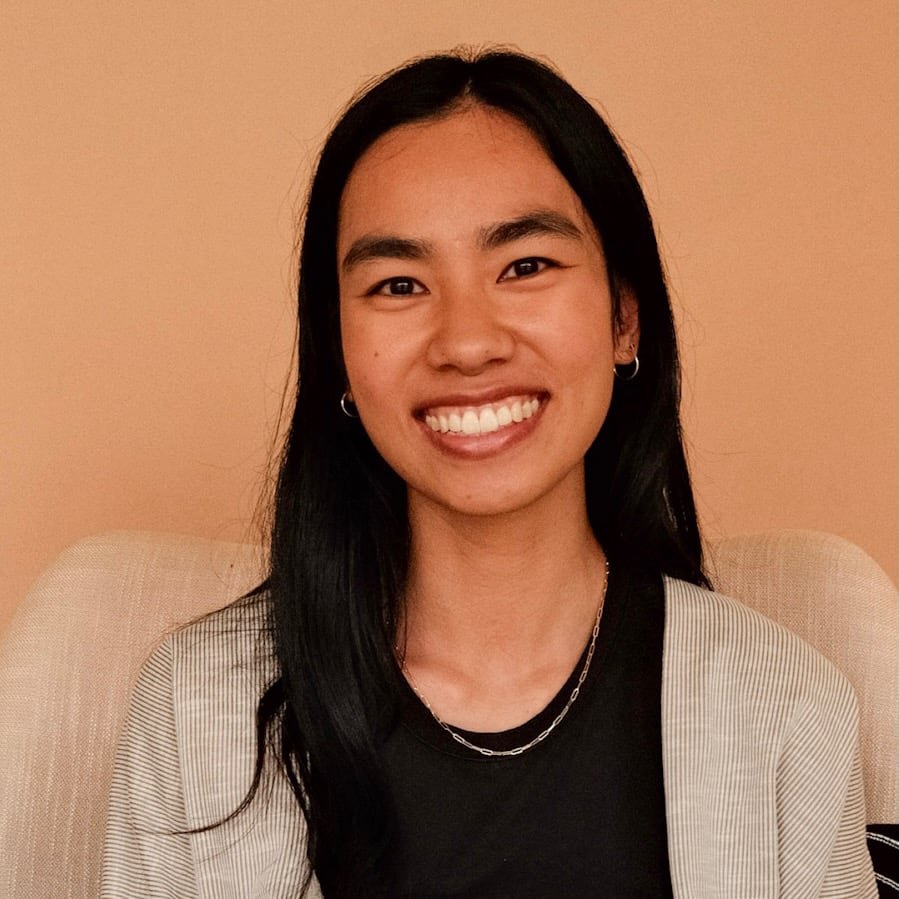
Bethany Ling, PsyD is a postdoctoral fellow who works with children, adults, and parents navigating relationships, identity, and emotional challenges. She supports clients with curiosity, empathy, and deep respect, helping them understand themselves more fully and communicate their needs with greater clarity and confidence. Drawing from her experience in both private practice and community mental health settings, she creates spaces of authenticity, connection, and gentle honesty where growth can take root.
Dr. Ling is currently accepting new clients in Carlsbad, Vista, and over telehealth throughout California.

(760) 334-6262
info@coastaltherapygroup.com
© Coastal Therapy Group, APC 2025 All Rights Reserved
We are a group practice of psychologists that work as therapists in Carlsbad, Bressi Ranch, Encinitas, & Vista. Many of our clients come from the surrounding towns of Oceanside, San Marcos, Escondido, Rancho Santa Fe, Solana Beach, and Del Mar.